
Cross-System Correlation: The Pattern Humans Miss

Cross-system correlation is the architectural capability of detecting patterns that span multiple tools — vendor compliance lapse in your vendor system + pending document requests in your fulfillment system = high-severity exposure. Single-system dashboards can't see these because they only know about their own data. An intelligence platform with a unified event bus can.
The Signals That Matter Most Live Between Tools
If you've ever had a 'how did nobody catch this' moment in your business, it was almost always a cross-system pattern. A vendor's insurance expired (system A) while three communities had pending work orders for that vendor (system B). A unit's revenue dipped 18% (system C) while a key staffer's hours dropped 40% (system D). A customer complaint cluster (system E) coincided with a vendor change (system F).
None of those signals are visible in any single tool. They only exist in the space between tools — which is exactly the space most business intelligence systems can't see.
A dashboard built on one system's data can only correlate within that system. The highest-value patterns in your business sit at the seams — and the seams are invisible to the tools sitting on either side of them.
What Cross-System Correlation Actually Requires
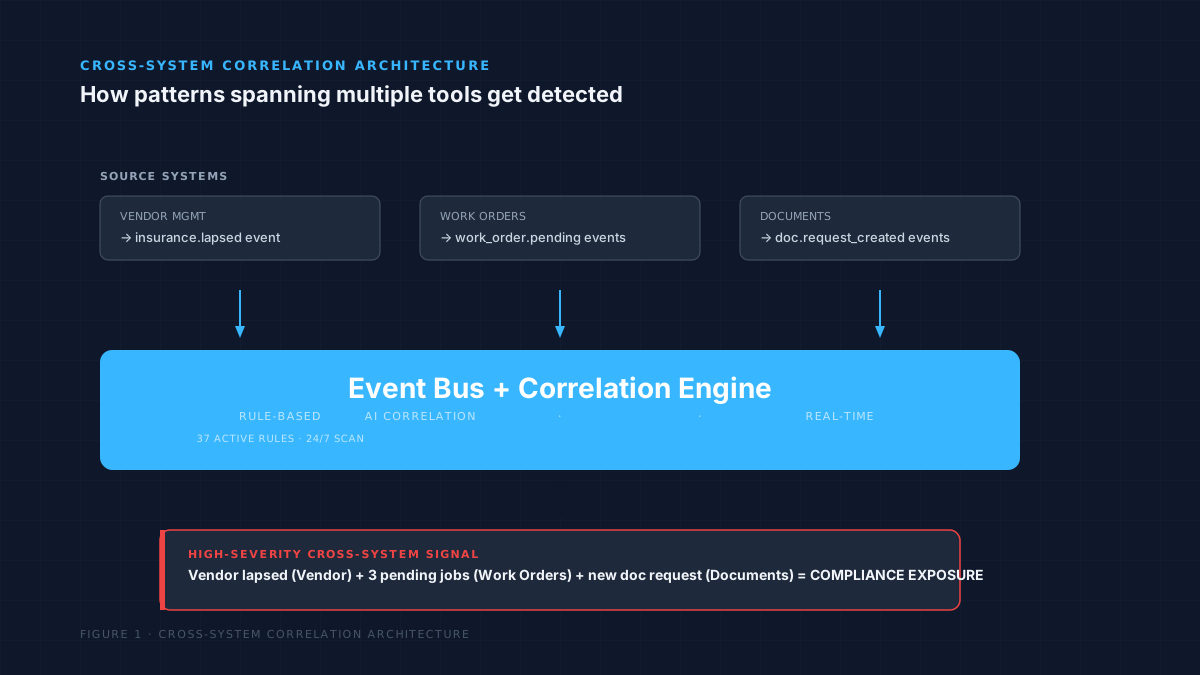
Three architectural components have to be in place:
1. Unified event bus
Every operational event from every system flows into one canonical stream. Vendor compliance changes, work order status, revenue events, complaint events, schedule changes — all in one place with consistent schema. Without this, there's nothing to correlate against.
2. Rule-based correlation
Explicit rules for known patterns: "if vendor compliance status changes to LAPSED, check for open work orders to that vendor in the last 30 days." These are the deterministic signals — you know what to look for. Rules execute on every event and surface matches in real time.
3. AI correlation for unknown patterns
An AI layer scans the event stream for anomalies and unexpected co-occurrences. The patterns you didn't know to look for. This is where the high-value insights live — the patterns that no rule writer would have anticipated because they only emerge after you have months of cross-system event data.
Real Examples From Live Deployments
- Vendor + Work Order: vendor's insurance lapsed in PropertyJobz while 3 pending work orders for that vendor sat in PropertyDocz. Caught 9 days before a property visit would have created liability exposure.
- Revenue + Staffing: Tuesday lunch revenue down 18% at one location coincided with reduced kitchen staff hours that week. The pattern surfaced as a correlated signal in the morning briefing rather than two separate metrics that nobody connected.
- Document Request + Compliance Hold: a resale certificate request came in for a community with an active compliance hold the management company hadn't flagged on the documents platform yet. System caught the conflict before the document went out.
- Investment Pipeline + Market Data: a deal in late-stage review surfaced a correlation between investor profile lens scoring and recent comparable transactions — the kind of cross-reference humans rarely make at deal-close speed.
Why This Is Architecturally Hard for Most Tools
Most BI tools live on top of a data warehouse fed by ETL jobs that run nightly. By the time the data is in the warehouse, the cross-system events have already happened — the correlation insight is at best a day late.
Intelligence platforms built for cross-system correlation are event-driven from the ground up. Events arrive as they happen. Correlation runs in real time. Signals fire seconds after the pattern emerges, not the next morning when someone runs the report.
Real-time event bus + real-time correlation = real-time signals. Nightly ETL + scheduled reports = nightly insights. The math on response time is brutally different — and it's why dashboards can't be retrofitted into intelligence platforms.
How XeedlyAI Deploys Cross-System Correlation
Every Xeedly intelligence platform deployment includes cross-system correlation as a core capability. Propertyolio correlates events across PropertyDocz and PropertyJobz for HOA management companies. Sovvrn correlates across POS, labor, voice intelligence, and review data for multi-unit restaurants. Pando correlates investor profile data against deal pipeline events. Same architecture, different verticals — the unified event bus and signal engine are the durable substrate.
Questions, answered.
- What is cross-system correlation in business intelligence?
- Cross-system correlation is the capability to detect patterns that span multiple tools — like a vendor compliance lapse coinciding with pending work orders for that vendor, or a revenue dip coinciding with staffing changes. Single-system dashboards can't see these patterns because they only have access to their own data.
- Why can't traditional BI tools do cross-system correlation well?
- Most BI tools sit on a data warehouse fed by nightly ETL jobs. By the time data lands in the warehouse, the cross-system event has already happened — the correlation insight is at best a day late. Intelligence platforms with event-driven architectures see events as they happen and correlate in real time.
- What's the difference between rule-based correlation and AI correlation?
- Rule-based correlation handles known patterns — explicit rules like 'if vendor status changes to LAPSED, check for open work orders.' AI correlation scans for unknown patterns and unexpected co-occurrences in the event stream, surfacing insights humans wouldn't have thought to query. Real platforms run both.
- How long does cross-system correlation take to deploy?
- Core event bus and correlation engine: 2–4 weeks. Each integrated system adds 1–2 weeks. AI correlation tuning improves over the first 30–60 days as the engine learns your business's normal patterns. Most clients see meaningful cross-system signals firing within the first month.
- Do I need to replace my existing tools to get cross-system correlation?
- No. The intelligence platform sits above your existing tools, ingesting events via webhooks or API. Your CRM stays. Your accounting stays. Your operational tools stay. The correlation engine adds visibility across them without forcing a rip-and-replace.
Ask anything about this briefing.
I've read it. I can synthesize, expand on any section, or point you to related briefings.
Find the signals living between your tools
Tell us which systems you run. We'll map the cross-system patterns that would emerge from a unified event bus + correlation engine deployment for your operation.
More from PRINCIPAL-INTELLIGENCE
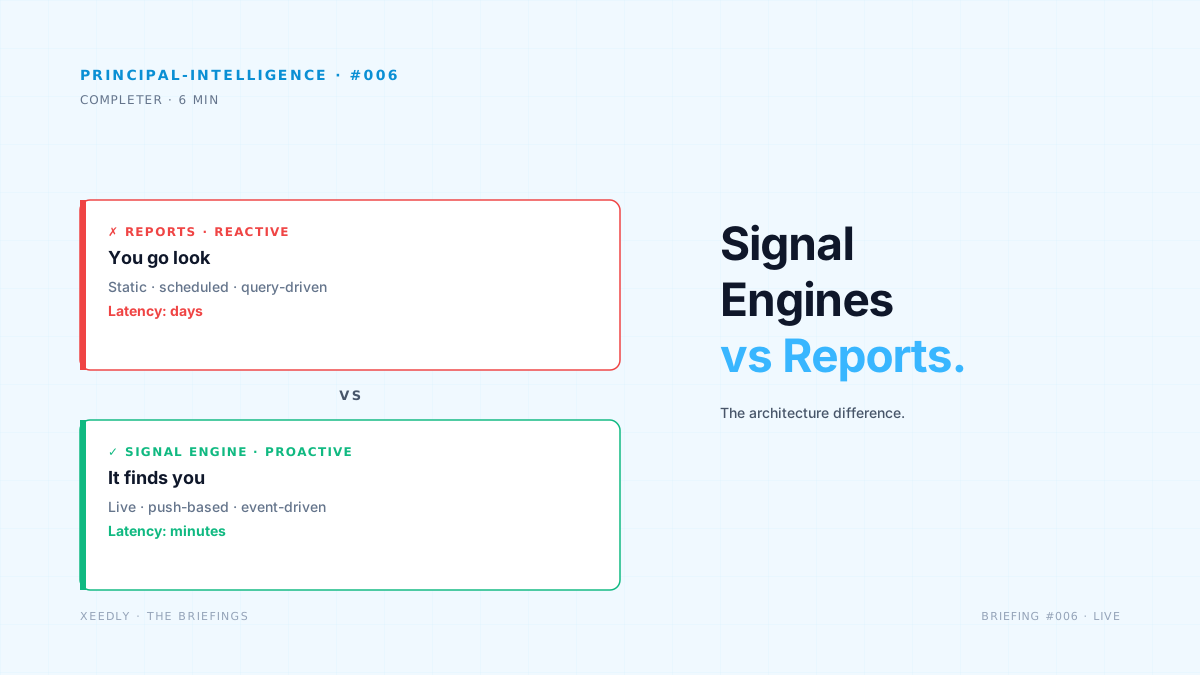
Signal Engines vs. Reports: The Architecture Difference
Reports are static documents you run. Signal engines are live systems that watch your business and tell you when something matters.
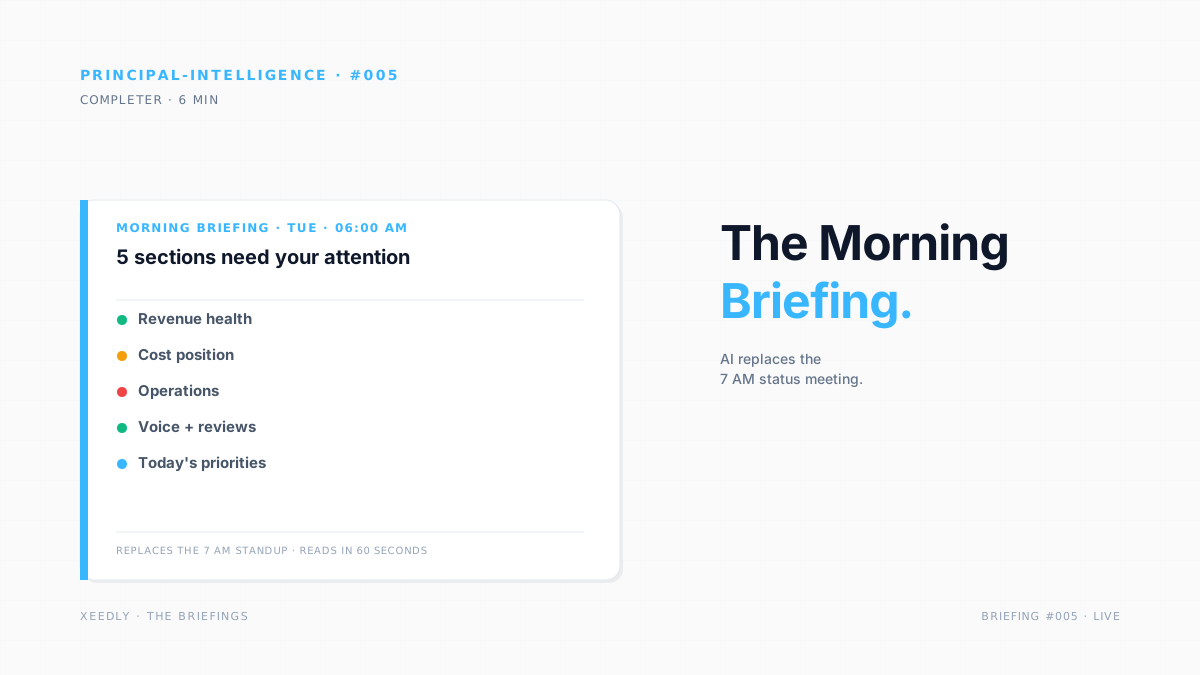
The Morning Briefing: How AI Replaces the 7am Status Meeting
The daily status meeting eats hours and surfaces stale information. AI morning briefings deliver the same intelligence in 60 seconds.
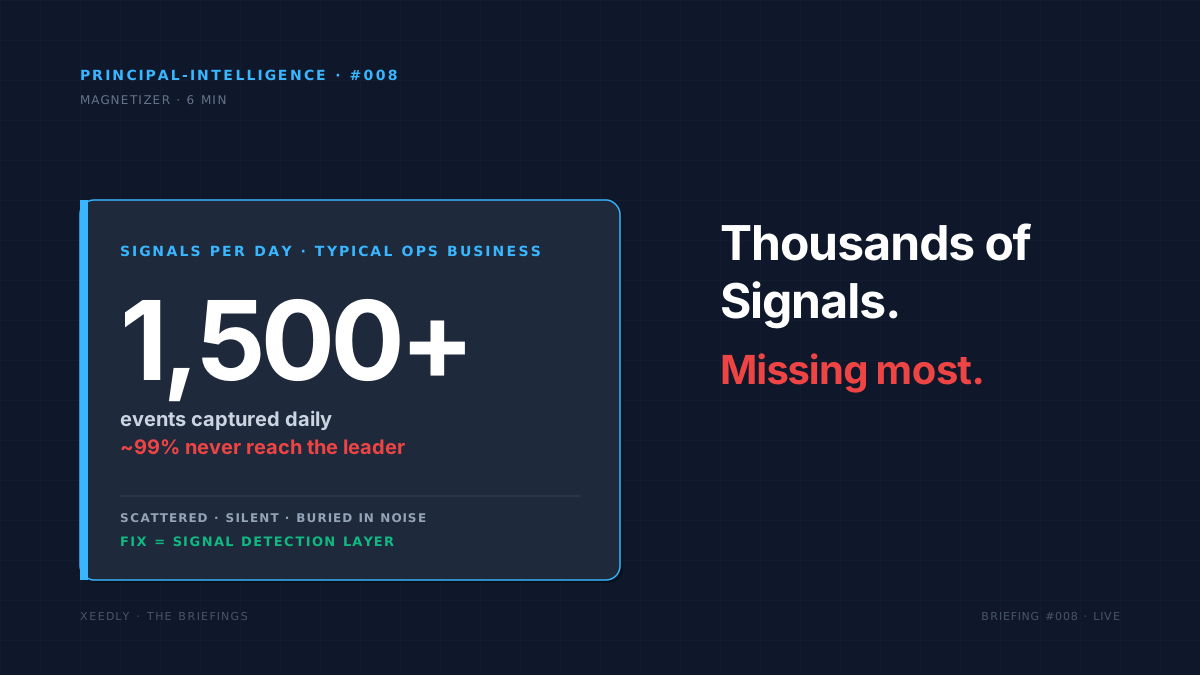
Why Your Business Generates Thousands of Signals (And You're Missing Most of Them)
Every operational business produces thousands of signals daily. Most never reach the leader. Here's why — and what to do about it.