
The Margin Equation: Calendar, Attention, Presence

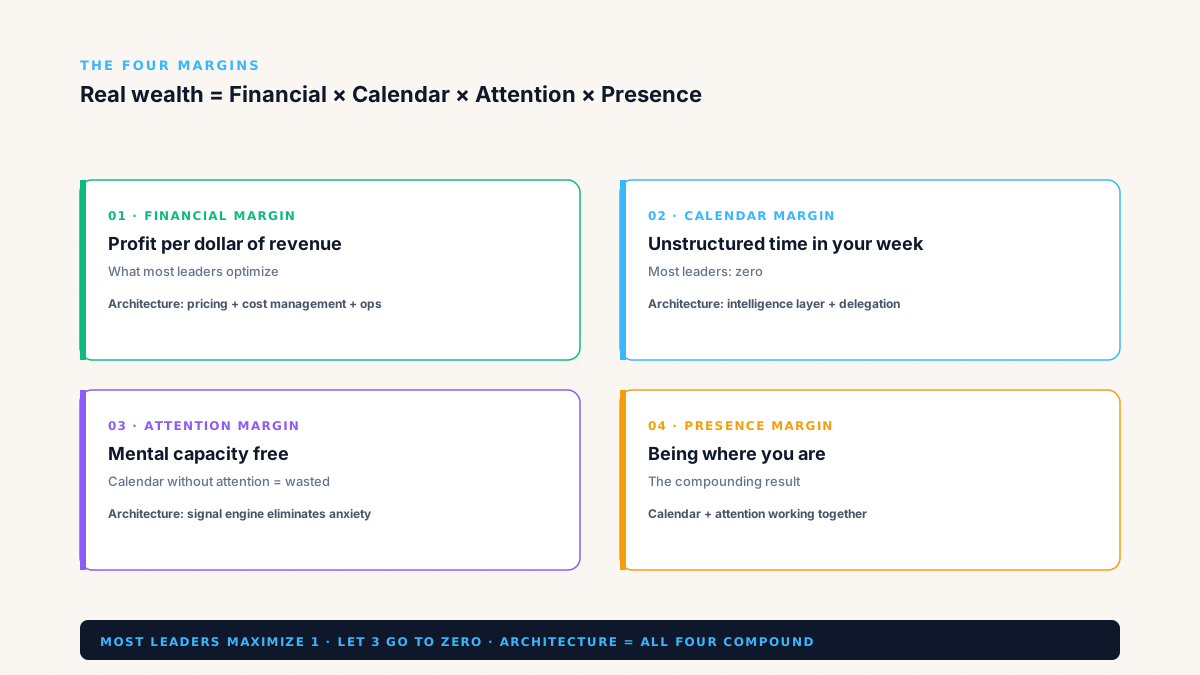
Most leaders optimize for financial margin (profit per dollar of revenue) and ignore three other margins that determine quality of life: calendar margin (unstructured time in your week), attention margin (mental capacity not absorbed by operations), and presence margin (ability to actually be where you are). Financial margin without the other three is success without fulfillment. Architecture that produces all four is the goal.
The Margin Most Leaders Optimize
Every business leader knows financial margin. Revenue minus expenses divided by revenue. The number that decides whether the business survives and whether the leader gets paid. Most strategy conversations, most operational decisions, most board reviews orbit this single metric.
Financial margin matters. It's necessary. It's not sufficient. Three other margins determine whether a leader's life feels like a life — and most leaders never name them, much less optimize for them.
The Three Margins That Matter
1. Calendar margin
Unstructured time in your week. Not just "open slots" on the calendar — actual periods where nothing is required of you. Most successful leaders have zero calendar margin. Every hour is allocated. Margin in the calendar is the structural prerequisite for strategic work, real rest, and being present at the moments that matter.
2. Attention margin
Mental capacity not currently absorbed by operations. You can have calendar margin and zero attention margin — sitting at your kid's recital while mentally running through tomorrow's problems. Attention margin is what makes you actually present in the time you have. Without it, calendar margin is wasted.
3. Presence margin
The combined ability to be where you are. This is calendar + attention working together — you have both the time and the headspace to actually be in the moment. Presence margin is what most leaders intended to build when they started the business. It's also what most leaders accidentally destroyed in the process of building.
Why Financial Margin Without the Others Is Hollow
Consider two leaders. Both run businesses producing $5M in annual revenue. Both have similar financial margins. Different lives:
- Leader A has $5M revenue, 25% financial margin, zero calendar margin (every hour booked), zero attention margin (constantly mentally in operations), and consequently zero presence margin. Successful on paper. Hollow in life.
- Leader B has the same $5M revenue, same 25% financial margin, 15 hours of calendar margin per week (genuinely unstructured), high attention margin (the business doesn't require constant mental occupancy), and consequently real presence margin — actually able to be at the kid's game, the dinner, the friend's wedding without distraction.
Same financial result. Different lives. The difference isn't motivation or character or work ethic. It's architecture.
How Architecture Produces Each Margin
- Financial margin comes from pricing, cost management, and operational efficiency. Most leaders know how to work on this one.
- Calendar margin comes from removing the leader from the middle of decisions that can be made elsewhere. Intelligence layers route information to the people who can act. The leader's calendar stops being a triage queue.
- Attention margin comes from signal engines that distinguish routine from notable. The leader stops carrying low-grade anxiety about "what might be going wrong right now?" because the system would tell them.
- Presence margin is the compounding result — calendar margin + attention margin produce the ability to actually be present in the moments that matter.
Real wealth = Financial margin × Calendar margin × Attention margin × Presence margin. Most leaders maximize one variable and let the others go to zero. The math of the equation requires all four to compound.
Why XeedlyAI Builds the Architecture for All Four
Every Xeedly product line (intelligence platforms, growth systems, operational systems, revenue-generating SaaS products) exists to produce all four margins together — not just financial margin at the expense of the other three. The architecture is the fix. Intelligence layers free attention. Signal engines protect presence. Codified standards give back the calendar. Five live deployments across multi-unit restaurants, HOA management, property management, real estate investing, and the Xeedly platform itself.
Questions, answered.
- What are the four margins a leader should optimize?
- Financial margin (profit per dollar of revenue), calendar margin (unstructured time in your week), attention margin (mental capacity not absorbed by operations), and presence margin (the ability to actually be where you are). Most leaders optimize only the first and ignore the others, which is how success without fulfillment gets built.
- What's the difference between calendar margin and attention margin?
- Calendar margin is unstructured time on the schedule. Attention margin is mental capacity not currently absorbed by operations. You can have one without the other — sitting at your kid's recital with empty calendar but full attention on tomorrow's problems = calendar margin without attention margin. Both are required to produce presence margin.
- How does business architecture produce calendar and attention margin?
- Intelligence layers route information to the people who can act — the leader's calendar stops being a decision-triage queue. Signal engines distinguish routine from notable — the leader stops carrying anxiety about what might be wrong because the system would say so. Together, these architectural pieces give back both time and headspace.
- Can you have high financial margin and zero presence margin?
- Yes — and most successful leaders do. They've optimized one variable (financial) and let the other three go to zero. The business produces strong financial results while the leader's calendar, attention, and presence have been entirely consumed. From the outside it looks like success. From the inside it looks hollow.
- What's the right ratio of the four margins?
- There's no universal ratio. The principle is that all four should compound rather than one being maximized at the expense of others. A workable target for many principals: 20%+ financial margin, 15+ hours weekly calendar margin, high attention margin (system handles routine), and consistent presence margin (actually able to be in moments that matter without distraction).
Ask anything about this briefing.
I've read it. I can synthesize, expand on any section, or point you to related briefings.
Build for all four margins
If you've been optimizing only the financial number and the other three margins have quietly gone to zero, the fix isn't motivational. It's architectural. Tell us about your business and we'll map what the architecture would look like.
More from PRINCIPAL-LIFE

Productivity Is a Responsibility. But It's Not an Identity.
Most high-achieving leaders confuse being productive with being themselves. The conflation costs them when productivity inevitably hits a wall.

Why Success Doesn't Fix the Things You Hoped It Would
The wins are real. The trophies are deserved. And the fulfillment most leaders expected to find doesn't arrive. Here's why.
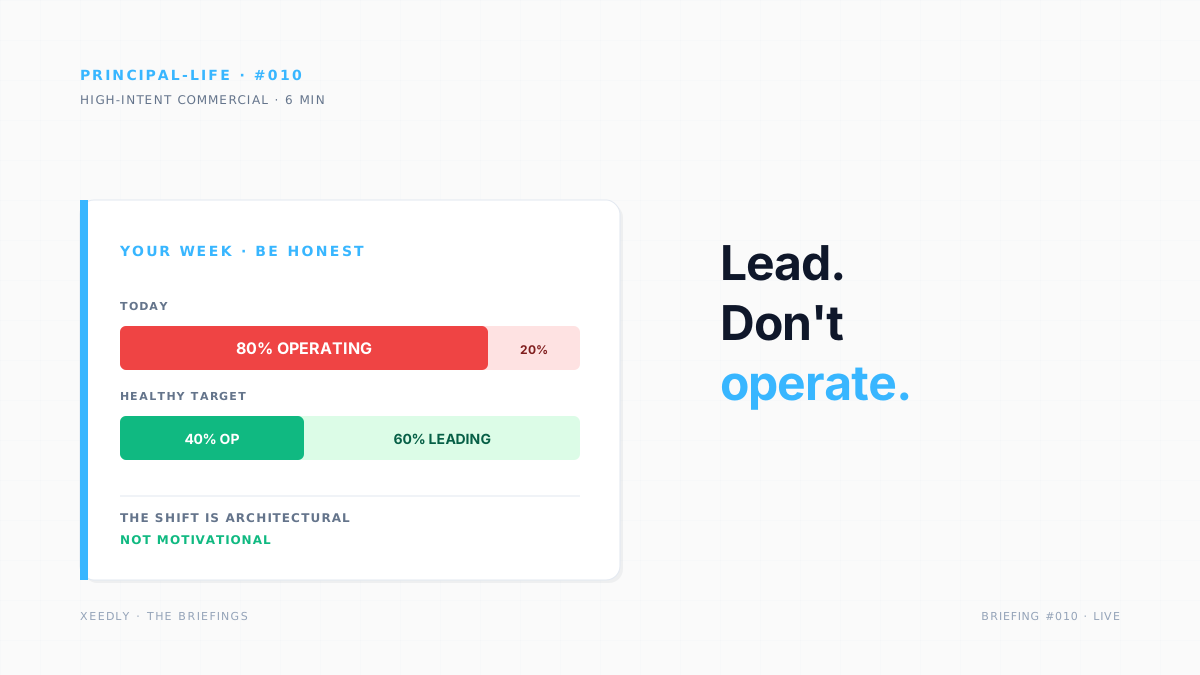
Leading vs. Operating: The Shift That Changes Everything
Most principals don't realize how much of their week is operating, not leading — and how that ratio predicts whether the business stays a cage or becomes a catalyst.