
Leading vs. Operating: The Shift That Changes Everything

Operating is doing the work the business needs done today. Leading is doing the work that determines what the business looks like a year from now. Most principals spend 80% of their week operating and call themselves leaders. The shift to actually leading isn't motivational — it's architectural. The system has to handle the operating, or the principal can't stop doing it.
The Distinction That Matters
Operating is what a business needs every day to function. Quotes get sent. Customers get answered. Invoices get sent. Problems get triaged. The day's work gets done.
Leading is what a business needs to become tomorrow what it isn't today. The strategic bets. The hard hiring calls. The relationships that won't pay off for two years. The decisions only the leader can make because they require the leader's specific context, taste, and judgment.
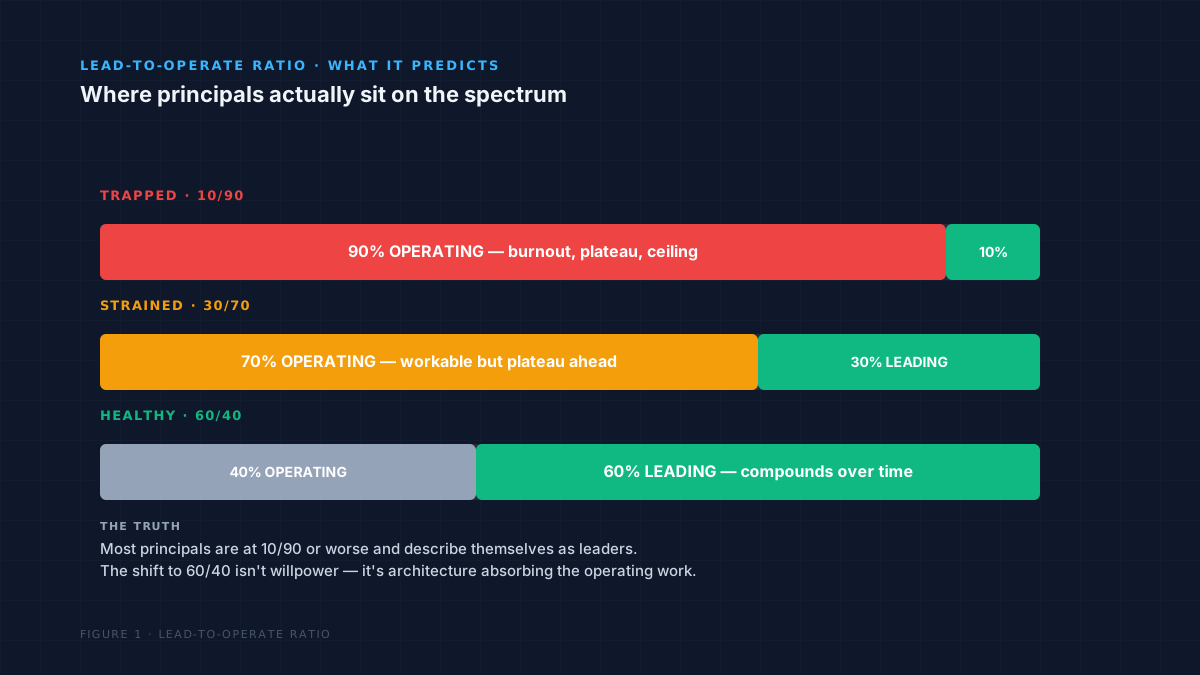
Look at your last 5 working days. What percentage of your time was on operating vs. leading? Most principals find they spent 70–90% operating. Most of them describe themselves as leaders.
Why the Ratio Matters
The ratio of leading-to-operating predicts almost everything about whether a business will compound over the next 3–5 years:
- Strategic position — leadership work compounds over time. Operating work disappears the moment the day ends.
- Team capability — the more the principal operates, the less the team gets to grow into leadership-adjacent decisions.
- Founder energy — operating is reactive and exhausting. Leading is creative and energizing (when done with margin). The ratio determines burnout trajectory.
- Company culture — what the principal spends time on signals what the company values. A principal who's always operating signals "we're a firefighting culture."
Why Most Principals Can't Make the Shift
The shift fails for most principals for one specific reason: there's no system handling the operating work, so when the principal stops doing it, things break.
Telling a principal to "stop operating and start leading" without changing the underlying architecture is like telling a juggler to stop juggling without first putting the balls down somewhere. The balls fall. Quality drops. Customers complain. The principal goes back to juggling within a week, more convinced than ever that they can't make the shift.
The shift from operating to leading isn't a willpower problem. It's an architecture problem. The system has to be capable of absorbing the operating work, or the principal can't safely stop doing it.
What Has to Change
Three architectural pieces typically enable the shift:
1. Operating work gets routed to the team with full visibility
The intelligence layer gives the team the cross-system visibility the principal used to provide. Decisions get made at the level where the information lives, not escalated up because nobody else can see across systems.
2. Exceptions get surfaced; the rest stays quiet
The signal engine distinguishes normal operations from notable exceptions. Routine activity doesn't reach the principal. Only the genuine exceptions — the things that actually need leadership judgment — make it through.
3. Standards live in the system
Quality stays consistent because the standard is retrievable without retrieving the principal. The team can answer "how do we do this" without asking, because the answer is encoded somewhere the team can find.
What Leading Actually Looks Like When the Architecture Is Right
- Full days, uninterrupted, on strategic work — without operations pulling at the calendar
- Hard hiring decisions made with care and time, not rushed because the next fire is starting
- Real relationship work — investors, partners, mentors, key customers — actually getting the time they deserve
- Vision work — thinking about what the business should look like in 2 years, not just what it needs to ship this week
- Personal renewal — time for the principal to be a person, which is what makes them effective when they show up to lead
When the ratio shifts from 10/90 leading to 60/40 leading, the business compounds at a different rate. Not because the leader is working harder. Because they're finally doing the work only they can do.
How XeedlyAI Makes the Shift Possible
Xeedly builds the architectural pieces that let principals stop operating and start leading: intelligence platforms for cross-system visibility, signal engines for exception detection, codified operational standards. Five live deployments across multi-unit restaurants, HOA management, property management, real estate investing, and the Xeedly platform itself. Standup is 2–4 weeks for the core architecture plus 1–2 weeks per integration. Most principals see their lead-to-operate ratio shift meaningfully within 3 months of deployment.
Questions, answered.
- What's the difference between leading and operating?
- Operating is doing the work the business needs done today — quotes, customer responses, invoice triage, daily problem-solving. Leading is doing the work that determines what the business looks like a year from now — strategic bets, hiring, long-term relationships, vision work. Most principals confuse the two.
- What's a healthy leading-to-operating ratio for a principal?
- 60/40 leading is the healthy target. 40/60 is workable but strained. Below 30/70, the principal is in operating mode masquerading as leadership — burnout, plateau, and ceiling are all already happening even if the business hasn't shown it yet.
- Why can't I just choose to stop operating and start leading?
- Because the operating work doesn't go away when you stop doing it. Without architecture to absorb it, things break — quality drops, customers complain, the team escalates more. The principal goes back to operating within a week, more convinced than ever the shift is impossible. Architecture has to come first.
- What architectural changes enable the shift?
- Three: an intelligence layer that gives the team cross-system visibility, a signal engine that distinguishes normal from notable so exceptions surface automatically, and codified operational standards in the system. Together these let the team absorb operating work safely — which lets the principal stop doing it.
- How long does the shift take after deploying the architecture?
- Architectural deployment: 2–4 months. Cultural transition (principal trusting the architecture, team working autonomously without escalation reflex): another 3–6 months. Most principals see their lead-to-operate ratio meaningfully shift within 3 months of deployment, with the full transition completing in 6–9 months.
Ask anything about this briefing.
I've read it. I can synthesize, expand on any section, or point you to related briefings.
Stop operating. Start leading.
The shift is real and architectural. Tell us about your business and we'll map what the operating-absorption layer would look like — so the shift becomes possible, not just aspirational.
More from PRINCIPAL-LIFE

The Margin Equation: Calendar, Attention, Presence
Most leaders optimize for financial margin and ignore the three margins that actually determine quality of life.

Productivity Is a Responsibility. But It's Not an Identity.
Most high-achieving leaders confuse being productive with being themselves. The conflation costs them when productivity inevitably hits a wall.

Why Success Doesn't Fix the Things You Hoped It Would
The wins are real. The trophies are deserved. And the fulfillment most leaders expected to find doesn't arrive. Here's why.