
The Morning Briefing: How AI Replaces the 7am Status Meeting

An AI morning briefing is a categorized, prioritized summary of what happened overnight and what needs attention today — generated by an intelligence platform reading your event bus and delivered to your inbox, SMS, Slack, or Teams before your first meeting. It replaces the daily standup or 7am status check with the same information, surfaced in 60 seconds, without the meeting overhead.
Why the 7am Status Meeting Has to Go
Almost every operational business has some version of the daily status check. Sometimes it's a 7am standup. Sometimes it's a 30-minute call with the operations lead. Sometimes it's an inbox triage session before the day starts. Whatever form it takes, it exists because the leader needs to know what happened overnight and what needs attention today.
Three structural problems with the meeting format:
- It's expensive. A 30-minute daily status meeting consumes 2.5 hours of senior leadership time per week. For a leadership team of four, that's 10 hours weekly burned on information transfer that could happen in 60 seconds asynchronously.
- Information arrives second-hand. The operations lead summarizes what they think the leader needs to know — filtered through their own interpretation. Important nuances get lost.
- Timing is fixed. Meetings happen at scheduled times, not when intelligence is most useful. Something important happens at 9am? It waits until tomorrow morning's standup unless someone happens to escalate it.
What an AI Morning Briefing Actually Contains
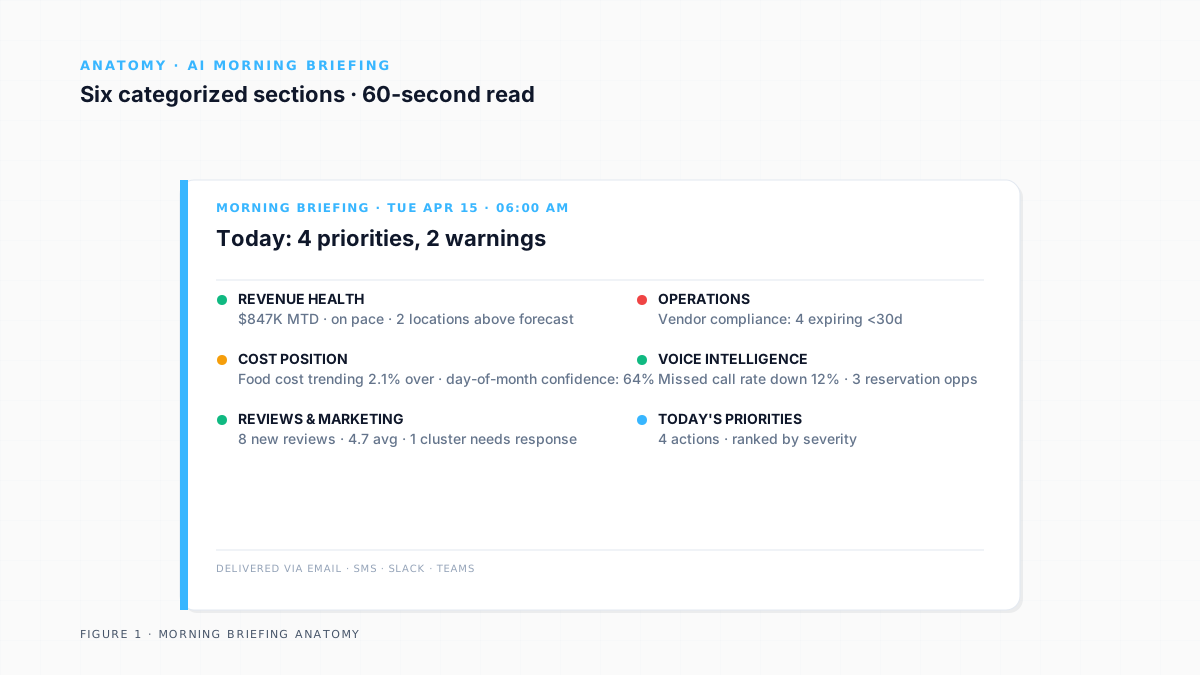
A well-designed briefing has six categories — adapted per industry but consistent in structure:
- Revenue health — what hit the bank, what's outstanding, anomalies vs trend
- Operational status — open work, completed work, today's priorities
- Compliance & vendor — anything expiring soon, anything overdue, any new gaps
- Communication & customer — call patterns, response times, complaint clusters
- Today's priorities — the 3–5 things the system thinks need decisions today, ranked by severity
- Cross-system correlations — patterns spanning multiple tools that wouldn't show in any single dashboard
Each section has 2–5 bullet points. Each bullet is actionable. The whole briefing reads in 60 seconds. The leader scans it, identifies what needs attention, and either acts or delegates.
Delivery Matters as Much as Content
A briefing that requires logging into a dashboard to read isn't a briefing — it's another dashboard. Real morning briefings get delivered to the channel the leader already uses:
- Email at 6am — the most common format. Lands in the inbox before the first cup of coffee.
- SMS — for urgent signals only, or as a complement to email for leaders who don't check email first thing.
- Slack or Teams — posted in a leadership channel for distributed teams who already use those tools.
- Phone-based voice briefing — for leaders who commute and want to listen rather than read.
The point is the briefing meets the leader where they already are, not behind a separate login.
What Replaces the Meeting Time
Most leaders who replace the 7am meeting with a morning briefing don't immediately fill the recovered time with other meetings. They use it for strategic work — the thinking that gets squeezed out when every morning starts with operational triage.
10 hours per week of recovered leadership time. Half of that often goes to strategic work that wasn't getting done. The other half goes to the principal actually being present at home or in deeper customer relationships — the work only they can do.
How XeedlyAI Builds Morning Briefings
Every Xeedly intelligence platform deployment includes AI morning briefings as a core capability. Sovvrn delivers categorized briefings to restaurant operators at 6 AM with six sections (revenue, cost, ops, voice intelligence, reviews, today's priorities). Propertyolio delivers the same pattern adapted for HOA management. Pando delivers it for property investment principals. Same architecture, vertical-specific content per silo. Standup is 2–4 weeks for the core platform.
Questions, answered.
- What is an AI morning briefing?
- An AI morning briefing is a categorized, prioritized summary of what happened overnight and what needs attention today — generated by an intelligence platform and delivered to email, SMS, Slack, or Teams before the leader's first meeting. It replaces the daily status meeting with the same information, surfaced in 60 seconds, asynchronous.
- What categories does a typical morning briefing include?
- Six categories adapted per industry: revenue health, operational status, compliance and vendor, communication and customer, today's priorities, and cross-system correlations. Each section has 2–5 actionable bullets. Total reading time around 60 seconds.
- Where does the morning briefing get delivered?
- Wherever the leader already works. Most common is email at 6 AM. SMS for urgent signals. Slack or Teams for distributed leadership teams. Even voice-format briefings for leaders who commute. The principle: meet the leader where they are, not behind another dashboard login.
- How is an AI morning briefing different from a daily report?
- Reports are static, pre-defined, and require interpretation. AI morning briefings are dynamic, prioritized, and surface only what needs attention. A daily report might show every metric; a morning briefing shows the 3–5 things that warrant a decision today plus context on why.
- How much time does replacing the daily meeting save?
- Typically 10 hours per week per leadership team (one 30-min daily standup × 5 days × 4 people). Half usually goes to strategic work that wasn't getting done. The other half goes to leader presence — at home, in deeper customer conversations, on hard hiring decisions.
Ask anything about this briefing.
I've read it. I can synthesize, expand on any section, or point you to related briefings.
Replace the meeting. Keep the information.
Tell us about your current status-meeting rhythm and the systems behind it. We'll show you what an AI morning briefing deployment would look like for your operation — and which signals would surface in the first week.
More from PRINCIPAL-INTELLIGENCE
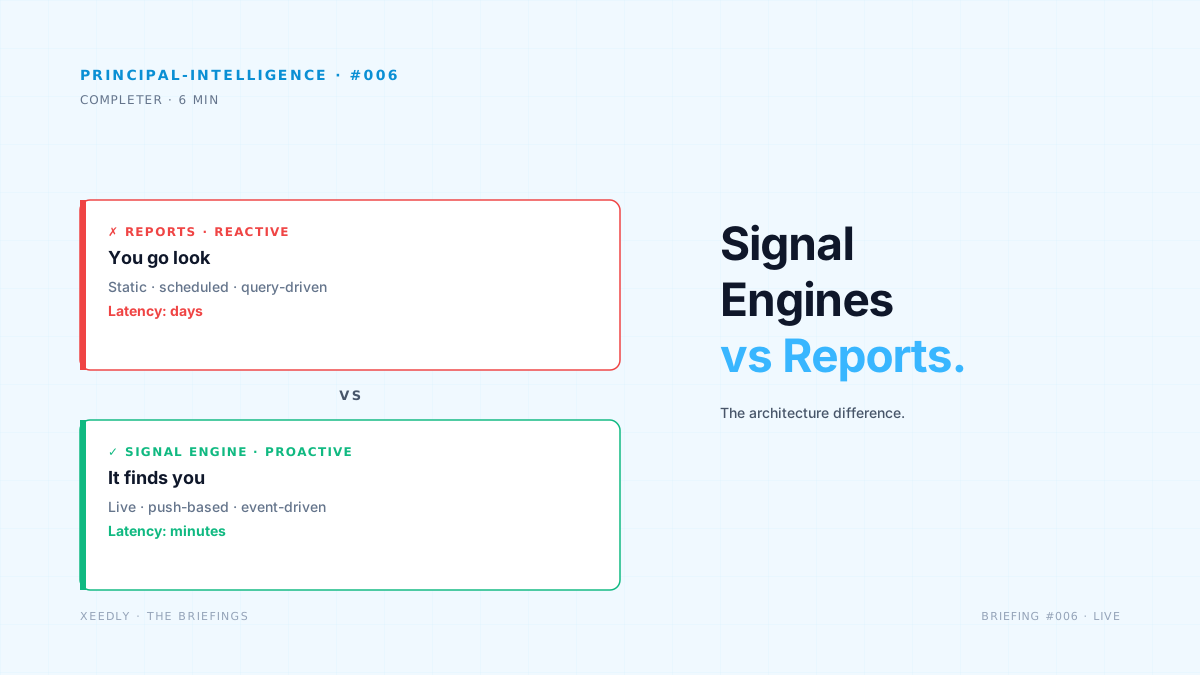
Signal Engines vs. Reports: The Architecture Difference
Reports are static documents you run. Signal engines are live systems that watch your business and tell you when something matters.
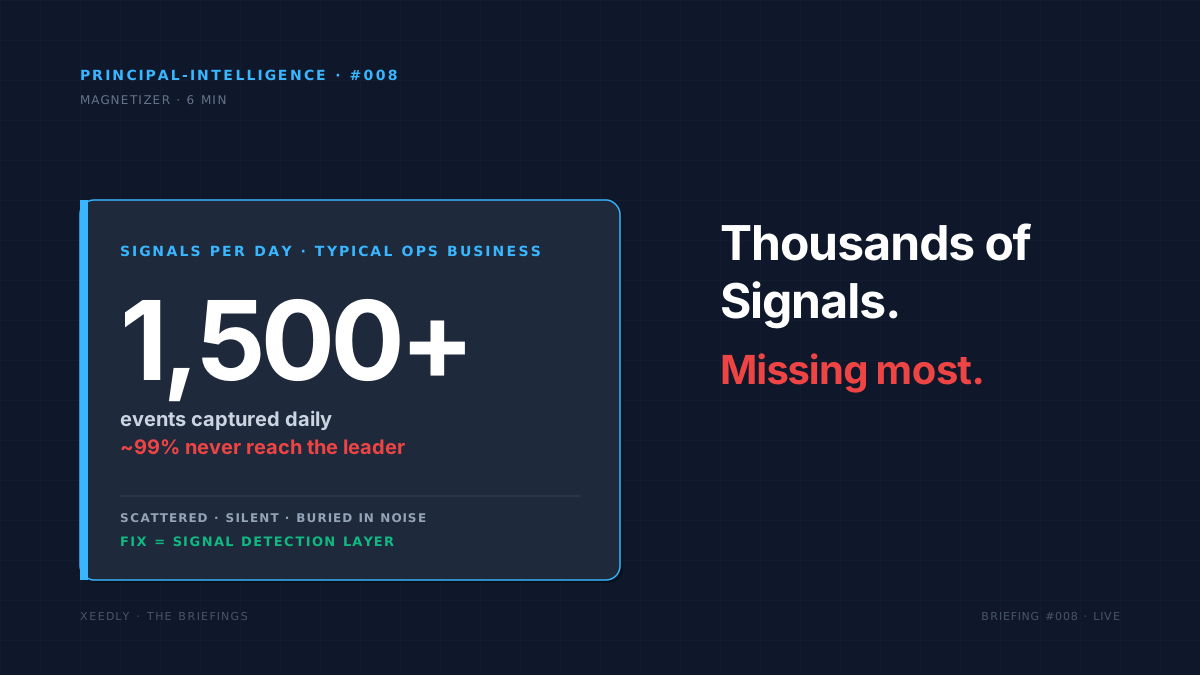
Why Your Business Generates Thousands of Signals (And You're Missing Most of Them)
Every operational business produces thousands of signals daily. Most never reach the leader. Here's why — and what to do about it.
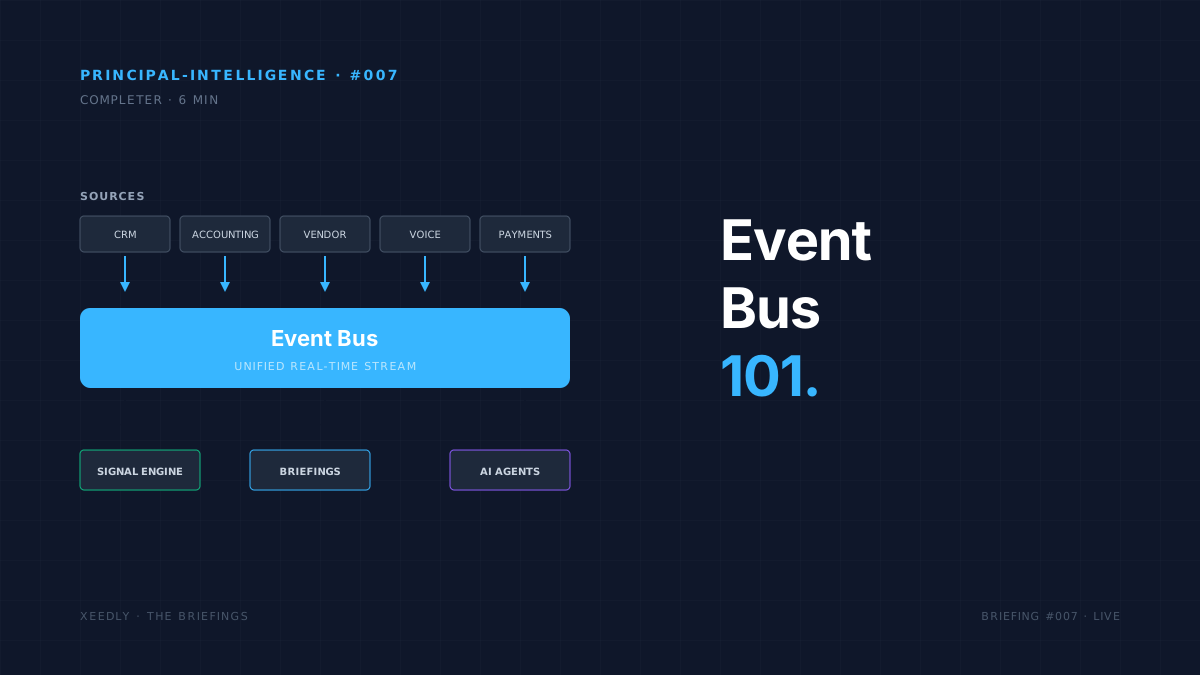
Event Bus 101: Why Every Operational Business Needs One
An event bus turns scattered operational data into a real-time stream. It's the foundation that separates intelligence platforms from dashboards.