
Signal Engines vs. Reports: The Architecture Difference

A report is a static document that summarizes data at a moment in time, run on a schedule or on request. A signal engine is a live system that continuously watches events from your business and pushes notable patterns to the people who need to know — automatically. Reports are reactive; signal engines are proactive. The architectural difference is the difference between intelligence that drives decisions and intelligence that decorates them.
The Old Model: Reports
Business intelligence has historically meant reports. Weekly P&L. Monthly KPI dashboard. Quarterly board deck. Annual performance review. Each report is a snapshot — a summary of what was true at the moment the report was generated, frozen in PDF or spreadsheet form.
Reports work for some things: retrospective analysis, board presentations, audit trails. They work poorly for operational intelligence because they're three structural steps removed from the moment a decision needs to happen:
- Step 1: Something happens in the business (the event).
- Step 2: Data lands in the warehouse via ETL (usually overnight).
- Step 3: Someone runs a report (next morning, next week, or whenever they remember).
- Step 4: The report gets reviewed (often days after the original event).
- Step 5: Action gets taken (if anyone notices the relevant signal in the report).
By the time a report surfaces a critical signal, the signal is already several days old. The opportunity to act early has passed. Reports are useful — but not for real-time operational decisions.
The New Model: Signal Engines
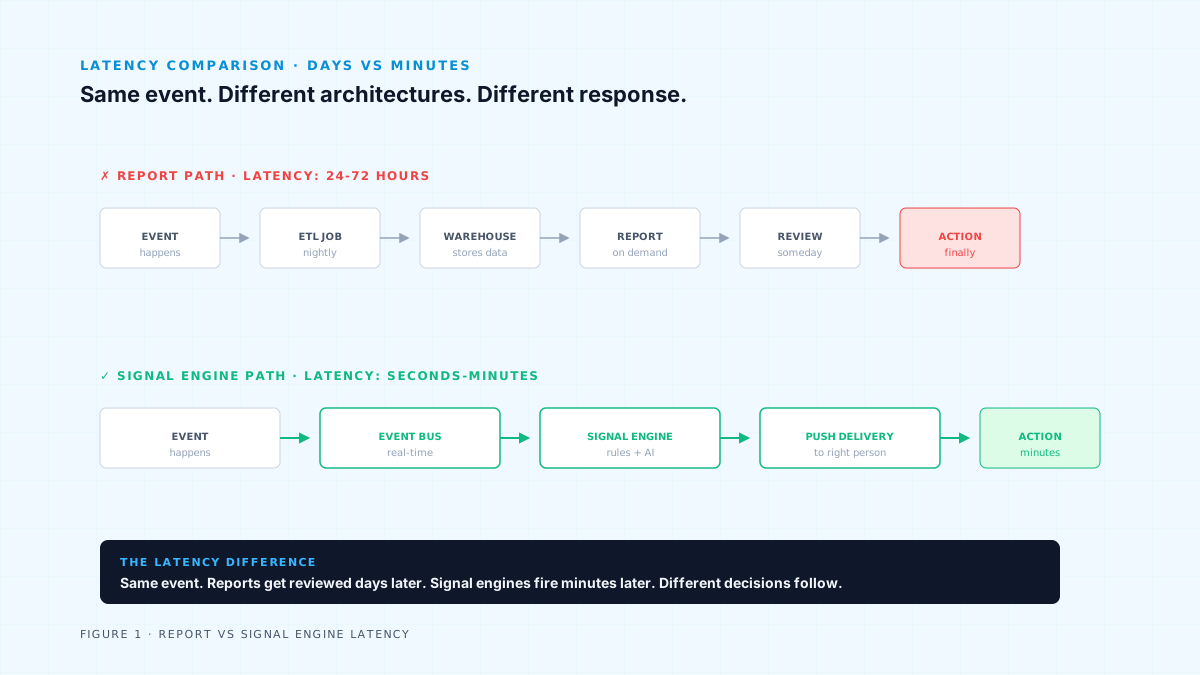
A signal engine inverts the model:
- Step 1: Something happens in the business (the event).
- Step 2: Event flows into the event bus in real time.
- Step 3: Signal engine evaluates the event against active rules and AI correlations.
- Step 4: If a signal is detected, it's pushed to the relevant people via their existing channels (email, SMS, Slack).
- Step 5: Action gets taken — often within minutes of the original event.
The latency drops from days to minutes. The information finds the leader instead of waiting for the leader to find it. The architecture is event-driven instead of query-driven.
Where Each Architecture Wins
Reports still win for:
- Retrospective analysis — "why did revenue drop last quarter?"
- Board presentations — structured, narrative, snapshot-style summaries
- Compliance audits — defensible point-in-time records
- Long-range trend analysis — patterns visible only over years
Signal engines win for:
- Operational decisions — anything where days of latency cost real money
- Exception management — vendor compliance lapses, customer churn signals, system health issues
- Cross-system patterns — correlations that require seeing events from multiple tools in real time
- Delegation enablement — surfacing the right info to the right person at the right time, so the principal doesn't have to be in every loop
Why Most Businesses Have Reports But No Signal Engine
Two reasons. First: the BI vendor market has historically sold reports and dashboards. That's where the licensing revenue is. Signal engines require event-driven architecture that doesn't fit the BI tool playbook.
Second: building a signal engine used to require serious engineering investment. A custom signal engine deployment that would have cost $400K and 9 months in 2020 now runs $5K–$25K and 2–4 weeks with a partner who's done it before. The economics have changed; most operational businesses haven't caught up.
How XeedlyAI Builds Signal Engines
Every Xeedly intelligence platform deployment includes a signal engine as the core capability. Configurable rule-based detection for known patterns. AI correlation for unknown patterns. Real-time delivery to the channels the team already uses. Five live deployments across multi-unit restaurants, HOA management, property management, real estate investing, and the Xeedly platform itself. Standup is 2–4 weeks for the core engine plus 1–2 weeks per integrated data source.
Questions, answered.
- What's the difference between a report and a signal engine?
- A report is a static document that summarizes data at a moment in time, run on a schedule or on request. A signal engine is a live system that continuously watches events from your business and pushes notable patterns to people automatically. Reports are reactive (you go look); signal engines are proactive (they find you).
- Are reports obsolete?
- No. Reports still win for retrospective analysis, board presentations, compliance audits, and long-range trend analysis. They're the wrong tool for real-time operational decisions, but they have legitimate uses. Most businesses need both — reports for the things reports are good at, signal engines for everything that requires response speed.
- Why don't more businesses have signal engines?
- Two reasons: BI vendors have historically sold reports and dashboards because that's where their licensing revenue is, and building custom signal engines used to require serious engineering investment ($400K+ deployments in 2020). AI-assisted development has compressed the cost to $5K–$25K and the timeline to 2–4 weeks, but most businesses haven't caught up to the new economics.
- How does a signal engine actually decide what to surface?
- Two layers: configurable rules for known patterns ("if vendor compliance changes to LAPSED, surface a high-severity signal") and AI correlation for unknown patterns (anomaly detection, unexpected co-occurrences). Together they distinguish routine from notable so that only events that warrant attention reach the leader.
- Can a signal engine work with existing reporting tools?
- Yes. The signal engine sits above your existing tools (CRM, accounting, vendor management) reading events as they happen. Your existing reports and dashboards stay in place for the use cases they're good at. The signal engine adds a real-time layer above them, not a replacement.
Ask anything about this briefing.
I've read it. I can synthesize, expand on any section, or point you to related briefings.
Move from reporting to detecting
Tell us about your current reporting cadence. We'll map what a signal engine deployment would look like — and which signals would have surfaced from your operations over the last 90 days that your reports missed.
More from PRINCIPAL-INTELLIGENCE
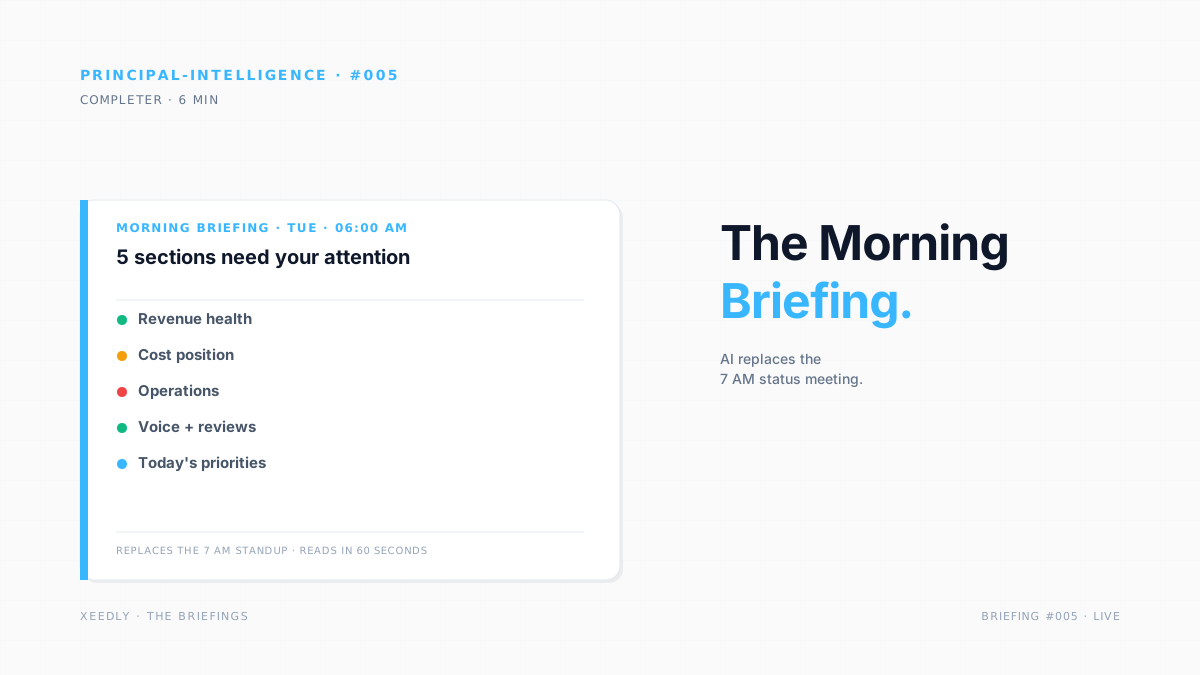
The Morning Briefing: How AI Replaces the 7am Status Meeting
The daily status meeting eats hours and surfaces stale information. AI morning briefings deliver the same intelligence in 60 seconds.
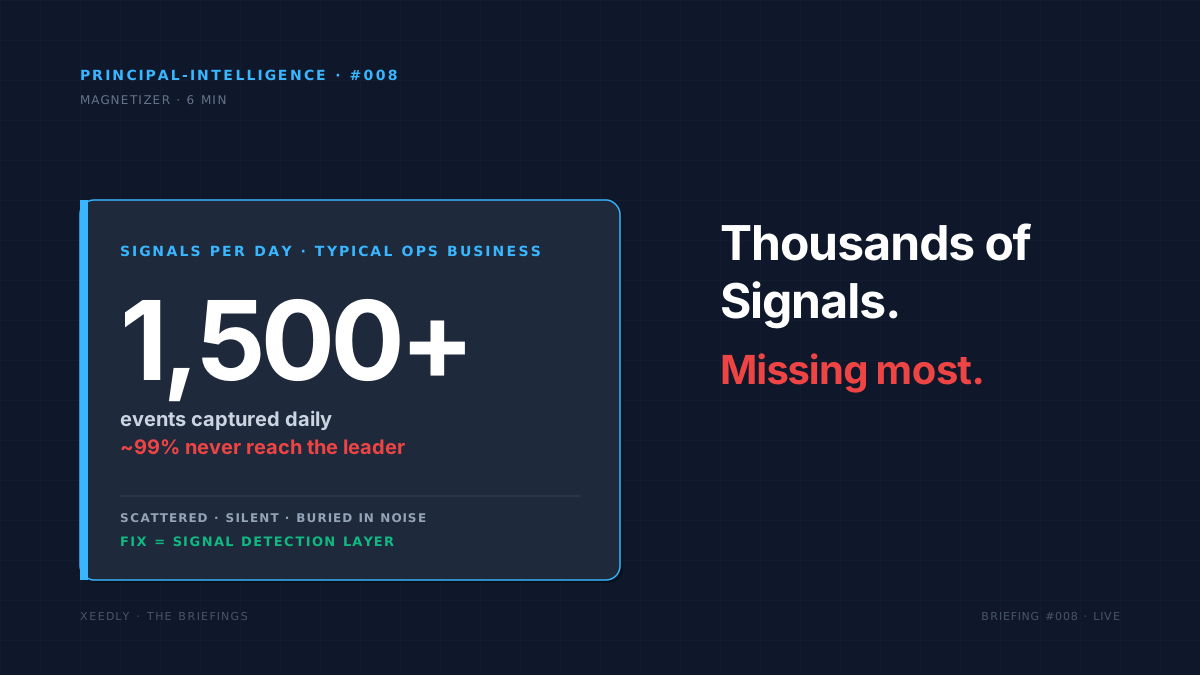
Why Your Business Generates Thousands of Signals (And You're Missing Most of Them)
Every operational business produces thousands of signals daily. Most never reach the leader. Here's why — and what to do about it.
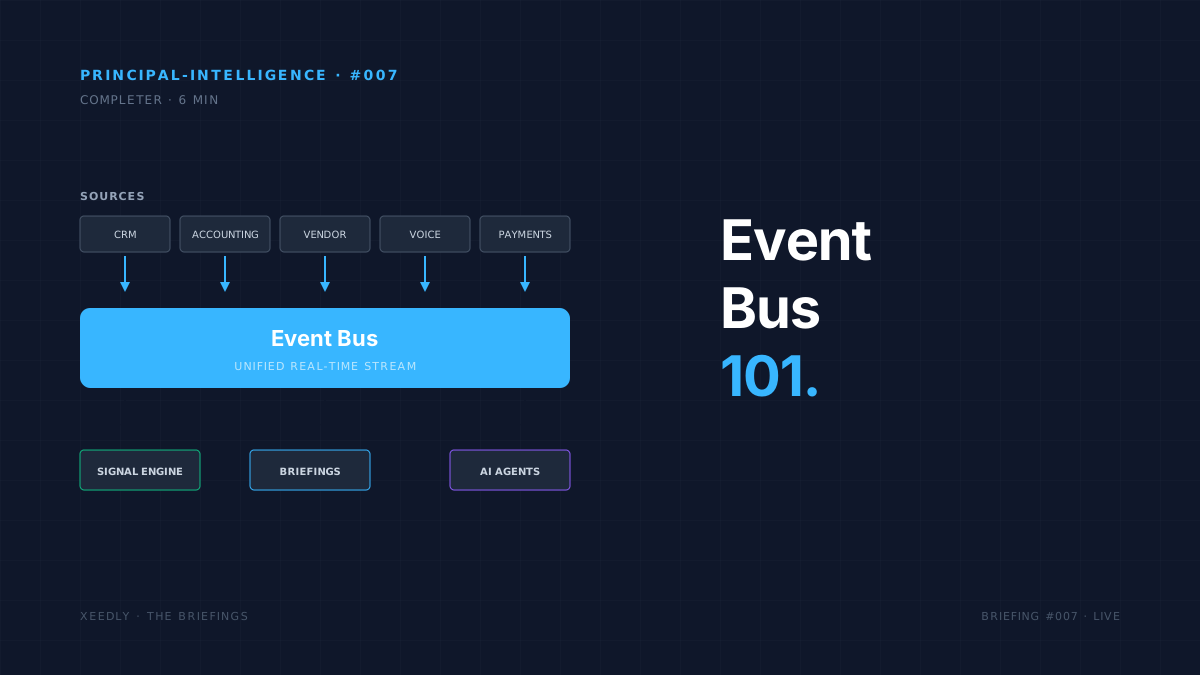
Event Bus 101: Why Every Operational Business Needs One
An event bus turns scattered operational data into a real-time stream. It's the foundation that separates intelligence platforms from dashboards.