
Building Intelligence Platforms vs. Buying BI Tools

Buy off-the-shelf BI when your data is generic, your workflows are common, and a dashboard-first model fits how your team actually works. Build a custom intelligence platform when your data sources are vertical-specific, your decisions need real-time signal detection across systems, and dashboards have already failed you. For most multi-unit operators in property management, restaurants, and real estate, the build path with the right partner now costs less and delivers more than the buy path it used to compete with.
The Old Build-vs-Buy Calculation
For two decades, the build-vs-buy decision for business intelligence was straightforward: buy. Building custom analytics required serious engineering investment, a long timeline, and ongoing maintenance most operating companies couldn't afford. Tableau, Looker, Domo, Sigma — these tools were the rational default because the build alternative was prohibitive.
That calculation is no longer accurate. The cost of building has collapsed. AI-assisted development means a custom intelligence platform that would have cost $400K and 9 months to build can now be standup'd in 2–4 weeks for $5K–$25K. The math has changed.
Build used to cost 50–100× more than buy. Now it's often the same cost as a single year of enterprise BI licensing — and delivers something the buy path can't.
When Buy Still Wins
Off-the-shelf BI is still the right answer in clear cases:
- Generic data, common workflows. SaaS revenue analytics for a SaaS company — buy. The data shapes are standardized, the patterns are well-understood, and dozens of products do this well.
- Analyst-driven culture. If your team includes data analysts who actually use the dashboards daily, the dashboard-first model fits. Tableau and Looker were built for analysts.
- One-off reporting needs. When the question is "can we slice this data by quarter" and the answer needs to be ad-hoc, off-the-shelf tools excel.
- Short-term hypothesis testing. Before committing to a long-term intelligence architecture, prove out the signal patterns with a faster tool.
The buy path is also right when your business genuinely fits the dashboard-first model — analysts spending their day in the tool, drawing insights, building reports for executive review. That's a valid model. It's just not most operating businesses.
When Build Wins
Custom intelligence platforms win in five conditions that most multi-unit operators meet:
1. Vertical-specific data sources
HOA management software. Restaurant POS systems. Property management platforms. Real estate deal databases. Off-the-shelf BI tools don't have native connectors to most of these — you spend half the project budget on data integration, and the result is fragile.
2. Signal detection, not reporting
When your team needs the system to detect anomalies and route them to the right person automatically, dashboards are the wrong primitive. You need an event bus and a signal engine — neither of which off-the-shelf BI provides natively.
3. Cross-system correlation
Patterns that span multiple tools — vendor compliance lapses coinciding with pending work orders, revenue dips correlated with staffing changes — require the system to see across tool boundaries. BI tools were built to analyze data within their own warehouse. Custom platforms can ingest from anywhere.
4. Operator-first delivery
When your team works from phones, vehicles, kitchens, properties — not from desks staring at dashboards — push delivery to email/SMS/Slack/Teams matters more than dashboard polish. Custom platforms build delivery as a primary capability. BI tools treat delivery as an afterthought.
5. Dashboards have already failed
If your team has tried 2+ BI tools that ended up unused, the issue isn't tool selection. It's that the dashboard-first model doesn't fit your business. The build path solves the structural problem the buy path keeps recreating.
The Cost Comparison (Real Numbers)
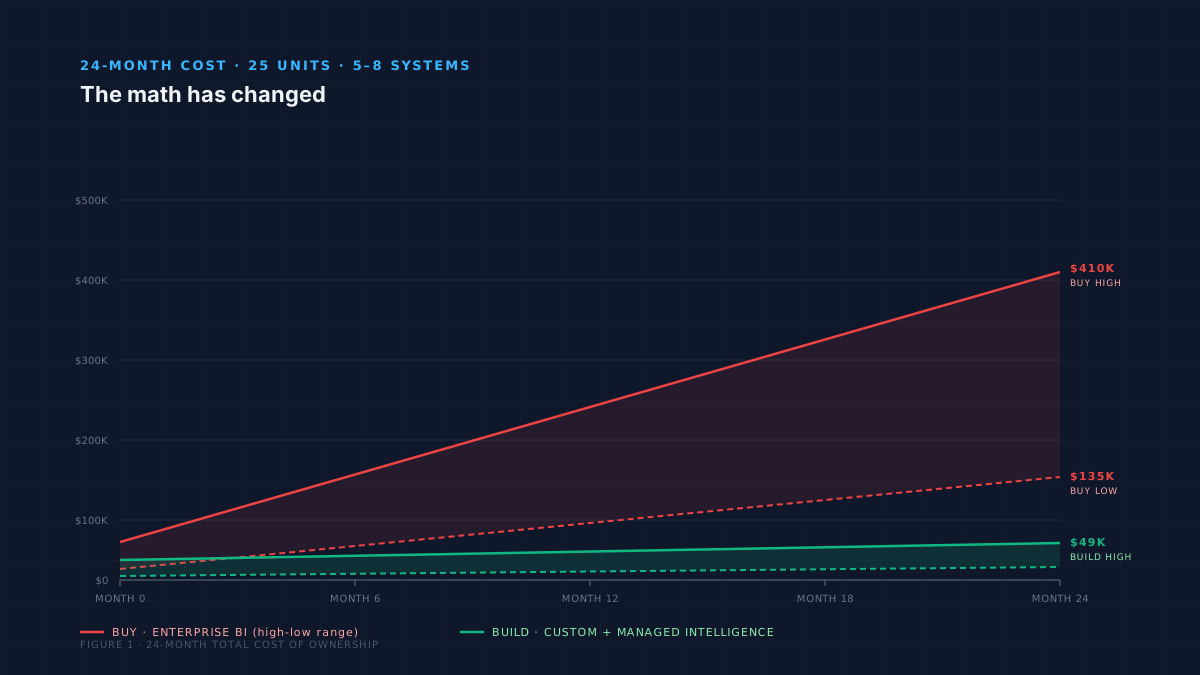
For a 25-unit operating business with 5–8 connected systems, the math typically looks like this:
| Cost Component | Buy (Enterprise BI) | Build (Custom Platform) |
|---|---|---|
| Initial setup / build | $15K–$50K (integration consulting) | $5K–$25K (one-time) |
| Annual licensing | $60K–$180K (per-seat or volume) | $0 |
| Ongoing managed support | $0 (you maintain it) | $5,940–$11,940/yr ($495–$995/mo) |
| 24-month total | $135K–$410K | $16K–$49K |
Even with managed support, the build path is typically 4–10× less expensive over 24 months. The cost compression isn't a discount — it's a structural shift in what custom development requires.
The Build Path Has Its Own Failure Modes
Build isn't automatically better. The build path fails when:
- You build it alone. Internal engineering teams without intelligence-platform experience often recreate dashboard patterns. The build looks new; the architecture is still dashboard-first.
- You don't define the silos. Without clear signal definitions and severity rules, the custom platform devolves into a custom dashboard. Same trap.
- You skip the delivery layer. A custom platform that only delivers via dashboard isn't a custom platform — it's a custom dashboard at higher cost than buying.
- You don't have someone maintaining the signals. Signals drift over time as the business changes. Without managed intelligence to keep the rules current, the platform's value decays.
Custom built by a team that has deployed the architecture before. Clear silo definitions and signal rules. Multi-channel delivery from day one. Ongoing managed intelligence to keep the rules current. With those four, build wins.
How Xeedly Approaches the Build Path
Xeedly is a build partner for operational intelligence platforms. Five live deployments using the same architectural pattern — event bus, signal engine, three-depth delivery (GLANCE, BRIEFING, DEEP), multi-channel push. Same platform, different verticals: Sovvrn (restaurants), Propertyolio (HOA management), Core HOA (property management implementation), Pando (real estate investment). Standup is 2–4 weeks for the core architecture plus 1–2 weeks per integrated data source. Intelligence deployments run $5K–$25K one-time; managed intelligence runs $495–$995/mo. Compare to enterprise BI's $60K–$180K annual licensing.
Questions, answered.
- When should I buy off-the-shelf BI vs build a custom intelligence platform?
- Buy when your data is generic, your workflows are common, and your team has analysts who actually use dashboards daily. Build when your data sources are vertical-specific, you need signal detection across multiple systems, your team works from phones/vehicles/properties instead of desks, or off-the-shelf dashboards have already failed you. For most multi-unit operators in property management, restaurants, and real estate, the build path now wins.
- How has the cost of custom intelligence platforms changed?
- Dramatically. AI-assisted development has compressed timelines and costs. A custom platform that required $400K and 9 months to build in 2020 can now be standup'd in 2–4 weeks for $5K–$25K. That's the same cost as a single year of enterprise BI licensing and delivers what BI can't (signal detection, cross-system correlation, multi-channel push delivery).
- What does a typical build vs buy comparison look like financially?
- For a 25-unit operating business with 5–8 connected systems over 24 months: enterprise BI typically runs $135K–$410K total (initial setup, licensing, internal maintenance). A custom intelligence platform with managed support runs $16K–$49K. The build path is typically 4–10× less expensive over 24 months and delivers signal-engine architecture instead of dashboard-first reporting.
- Can my internal team build this instead of hiring an outside partner?
- Sometimes, but most internal teams without intelligence-platform experience recreate dashboard patterns under a new label. The build path's failure modes (no clear silo definitions, no delivery layer, no managed signal maintenance) are easy to fall into when the team hasn't done it before. A partner with prior deployments avoids the patterns that make custom builds fail.
- What ongoing support does a custom intelligence platform need?
- Managed intelligence — typically $495–$995/mo — to keep signal rules current as your business evolves. New systems get integrated, new signals get defined, anomaly detection thresholds get tuned. Without ongoing maintenance the platform's value decays over 12–18 months as the operational landscape changes underneath the rules.
Ask anything about this briefing.
I've read it. I can synthesize, expand on any section, or point you to related briefings.
Run your own build vs buy analysis
Tell us how many units you run, which systems are in play, and where your current BI tool has failed you. We'll model a build vs buy comparison for your specific operation — no sales pitch, just numbers.
More from PRINCIPAL-INTELLIGENCE
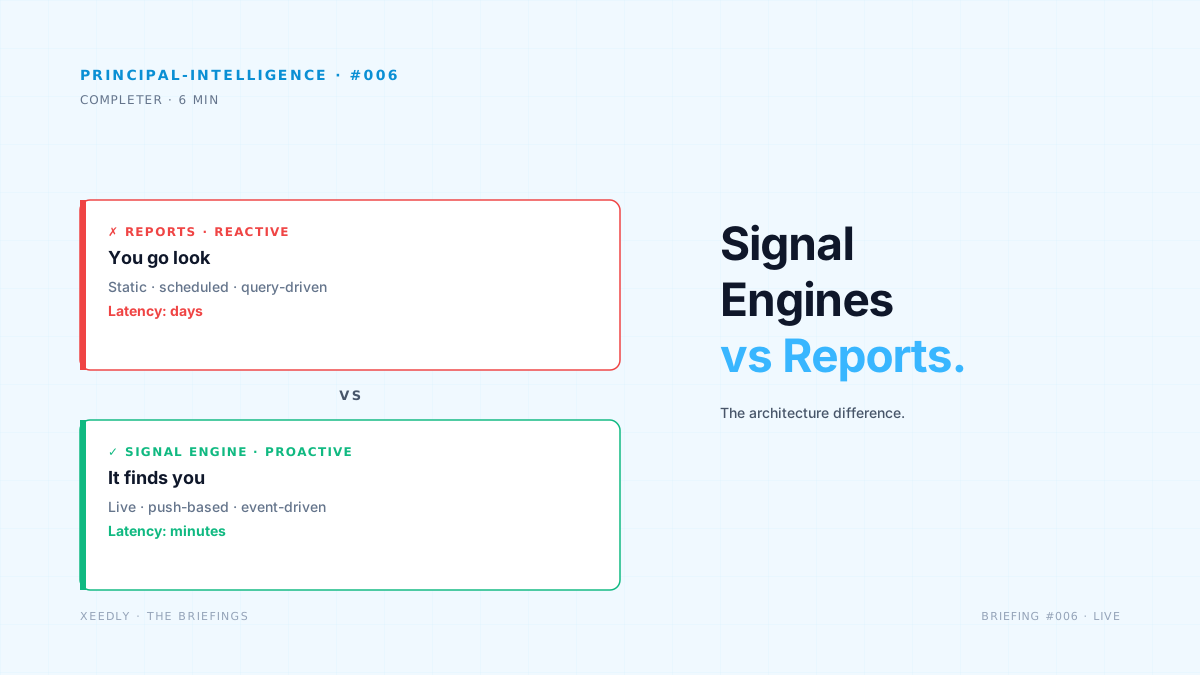
Signal Engines vs. Reports: The Architecture Difference
Reports are static documents you run. Signal engines are live systems that watch your business and tell you when something matters.
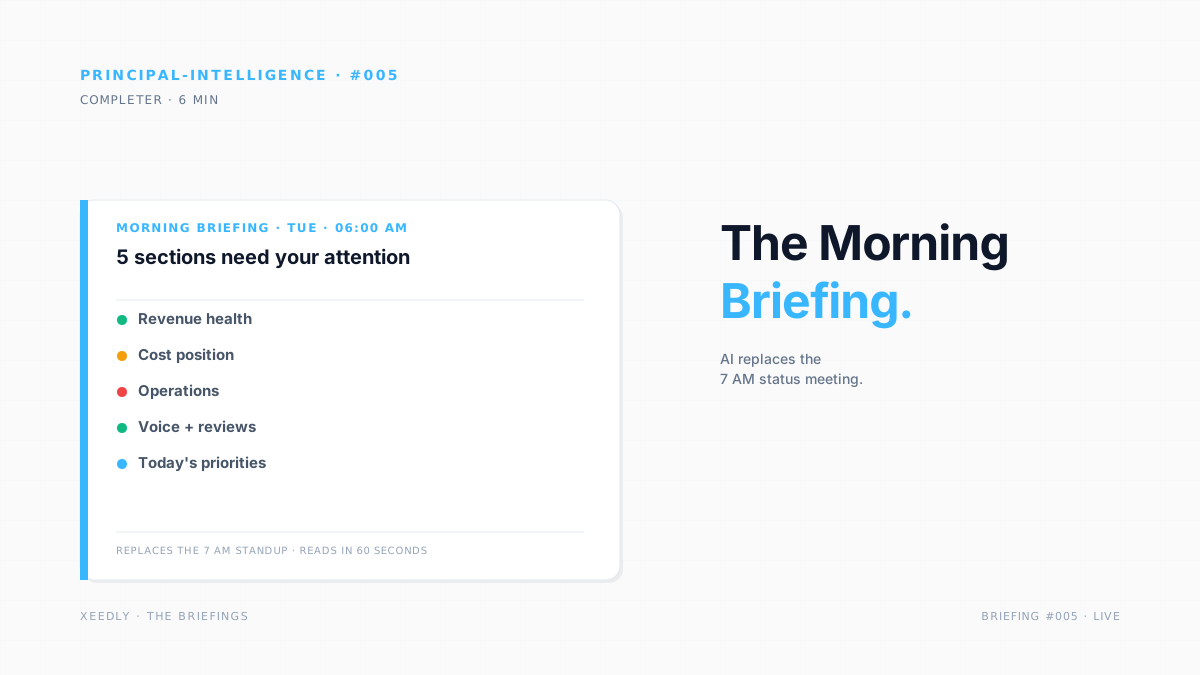
The Morning Briefing: How AI Replaces the 7am Status Meeting
The daily status meeting eats hours and surfaces stale information. AI morning briefings deliver the same intelligence in 60 seconds.
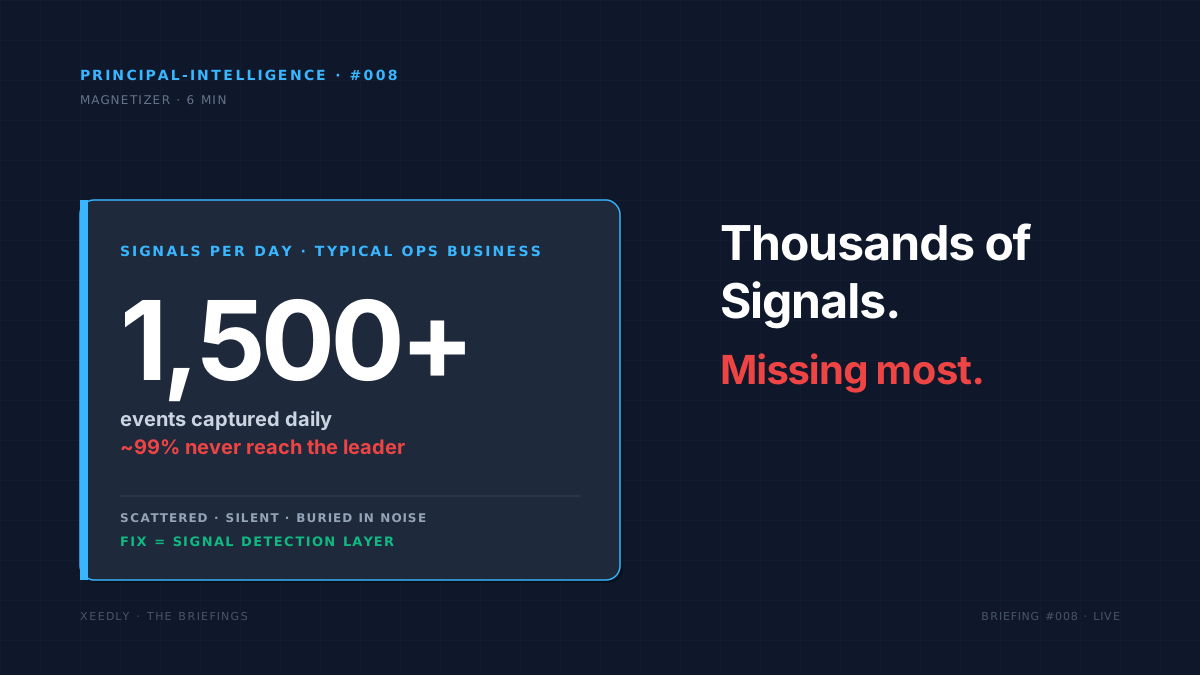
Why Your Business Generates Thousands of Signals (And You're Missing Most of Them)
Every operational business produces thousands of signals daily. Most never reach the leader. Here's why — and what to do about it.