
The Founder Mode Trap: When Being Indispensable Becomes Liability

Founder mode — the founder being in every detail, every decision, every customer — works at small scale and breaks at every larger scale. The trap is that it keeps working just well enough to feel necessary while quietly costing the founder their health, their relationships, and the company's ceiling. The fix isn't 'work less.' It's architectural: build the systems that make the founder's presence valuable rather than required.
Why Founder Mode Worked
There's a reason founder mode is a real thing. At the start, the founder being in every decision is the right answer. They have full context. They know every customer. They can move faster than any committee or delegation chain. The business runs at the speed of the founder's thinking — which is fast.
For the first few years, this is a feature. The company outpaces competitors because the founder is the operating system. Decisions get made in minutes that would take competitors weeks. The founder's judgment is the company's competitive advantage.
Where Founder Mode Becomes the Trap
Somewhere between $1M and $10M ARR (or 5–50 employees, or 3–10 units, depending on the business), founder mode stops scaling. The volume of decisions exceeds what one person can hold in working memory. Customers wait. Quality drifts at the edges where the founder isn't watching. The founder starts staying up later just to keep up with the inbox.
Founder mode keeps working just well enough to feel necessary — which prevents the founder from doing the architectural work that would replace founder mode with something better. The cost is compounding in real time, but it's invisible because the business is still growing.
Three costs compound in this phase:
- The founder's health — sleep, exercise, presence at home all get sacrificed first because they're the easiest things to cut.
- The team's capability — every decision routed through the founder is a decision the team didn't make and didn't grow from. The bench gets shallower, not deeper.
- The company's ceiling — the business can only grow as big as one person can hold in their head. The ceiling moves with the founder's bandwidth, not with the market opportunity.
Why 'Just Delegate More' Doesn't Work
Every founder in this trap has been told to 'just delegate.' Most have tried. Most have found it doesn't work, because:
- The delegate doesn't have full visibility. They have to come back to the founder for context before making decisions.
- Standards live in the founder's head. "How would Shad/Sarah/Mike handle this?" routes everything back through the founder for the standard.
- Exception detection is missing. Without a signal layer that knows what's normal vs. notable, the delegate over-escalates because they can't tell what's worth bothering the founder about.
- The founder still wants to know. Letting go intellectually doesn't make the muscle memory of being in every loop go away. The founder keeps checking in, which kills the delegate's autonomy.
What Actually Replaces Founder Mode
Founder mode doesn't get replaced by 'better delegation.' It gets replaced by architecture that gives the team what the founder used to give: visibility, standards, and exception detection.
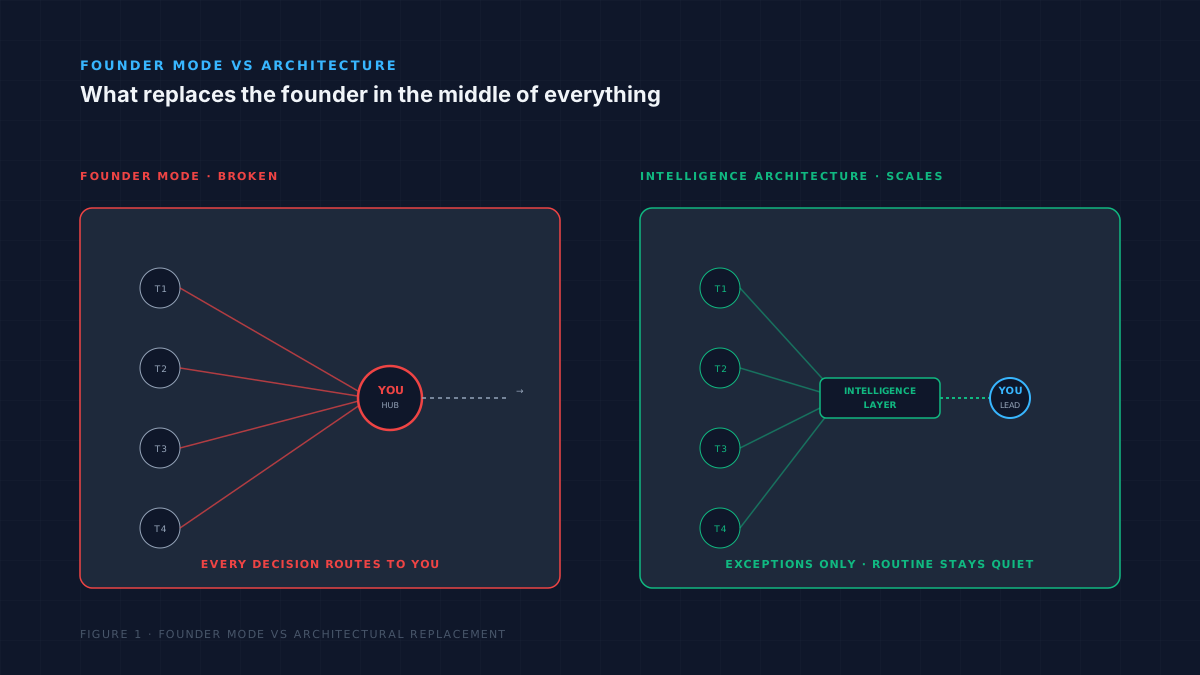
Three architectural changes that work
- Intelligence layer — operational visibility routed to the people who can act on it, in the channels they already use. The team stops asking the founder for cross-system context because they can see it themselves.
- Signal engine — automated detection of what's normal vs. notable. The team stops over-escalating because the system distinguishes anomaly from routine.
- Codified standards — "how we do things" lives in the system, not in the founder's head. Quality stays consistent across people because the standard is retrievable without retrieving the founder.
When the architecture is right, the founder's presence becomes valuable rather than required. They lead the strategic work only they can do. They're present at the moments that matter. The cage opens.
The Honest Timeline
Replacing founder mode isn't quick. The architectural changes (intelligence layer, signal engine, codified standards) take 2–4 months to deploy. The cultural transition — founders actually trusting the architecture, teams actually working without escalation reflex — takes another 3–6 months on top of that.
The 6–12 month transition feels long when you're in the trap. It feels short when you're on the other side of it. The founders who make the transition usually look back at the cost of staying in founder mode and wonder why they didn't make the move earlier.
How XeedlyAI Helps Founders Get Out of Founder Mode
Xeedly builds the architectural pieces that replace founder mode: intelligence platforms for cross-system visibility, signal engines for exception detection, codified operational standards in software. Five live deployments across multi-unit restaurants, HOA management, property management, real estate investing, and the Xeedly platform itself. Standup is 2–4 weeks for the core architecture plus 1–2 weeks per integration. The transition out of founder mode typically completes within 6–9 months of deployment.
Questions, answered.
- What is the founder mode trap?
- Founder mode — the founder being in every detail, every decision, every customer — works at small scale and breaks at every larger scale. The trap is that it keeps working just well enough to feel necessary while quietly costing the founder their health, their relationships, and the company's ceiling.
- When does founder mode become a problem?
- Usually between $1M and $10M ARR (or 5–50 employees, or 3–10 units, depending on the business). At this scale the volume of decisions exceeds what one person can hold in working memory, and the costs of founder dependency start compounding faster than the business is growing.
- Why doesn't 'just delegate more' fix founder mode?
- Four reasons: delegates don't have the founder's full visibility, standards live in the founder's head, exception detection is missing so delegates over-escalate, and the founder's muscle memory of being in every loop keeps pulling them back in. Delegation works after architecture is fixed, not before.
- What actually replaces founder mode?
- Architecture, not better delegation. Three changes: intelligence layer that routes operational visibility to the people who can act on it; signal engine that distinguishes normal from notable; codified standards in the system so quality doesn't depend on the founder's presence. Together these give the team what the founder used to give.
- How long does the transition out of founder mode take?
- Architectural deployment: 2–4 months. Cultural transition (founders trusting the architecture, teams working without escalation reflex): another 3–6 months. Total 6–12 months. Feels long when you're in the trap. Feels short on the other side of it.
Ask anything about this briefing.
I've read it. I can synthesize, expand on any section, or point you to related briefings.
Build the architecture that lets you out
Founder mode is a phase, not a permanent state. Tell us about your business and we'll map what the architectural replacement would look like — and how the transition out actually unfolds.
More from PRINCIPAL-LIFE

The Margin Equation: Calendar, Attention, Presence
Most leaders optimize for financial margin and ignore the three margins that actually determine quality of life.

Productivity Is a Responsibility. But It's Not an Identity.
Most high-achieving leaders confuse being productive with being themselves. The conflation costs them when productivity inevitably hits a wall.

Why Success Doesn't Fix the Things You Hoped It Would
The wins are real. The trophies are deserved. And the fulfillment most leaders expected to find doesn't arrive. Here's why.