
The Desire → Priorities → Decisions → Actions → Happiness Framework

Desire determines priorities. Priorities determine decisions. Decisions determine actions. Actions determine happiness — or the lack of it. The chain runs in one direction when you're designing a life. It runs in the opposite direction when you're diagnosing why your life isn't matching what you wanted. Walk it backward when something feels off.
The Chain Forward
Every life is built on a chain that most people never name. It runs like this:
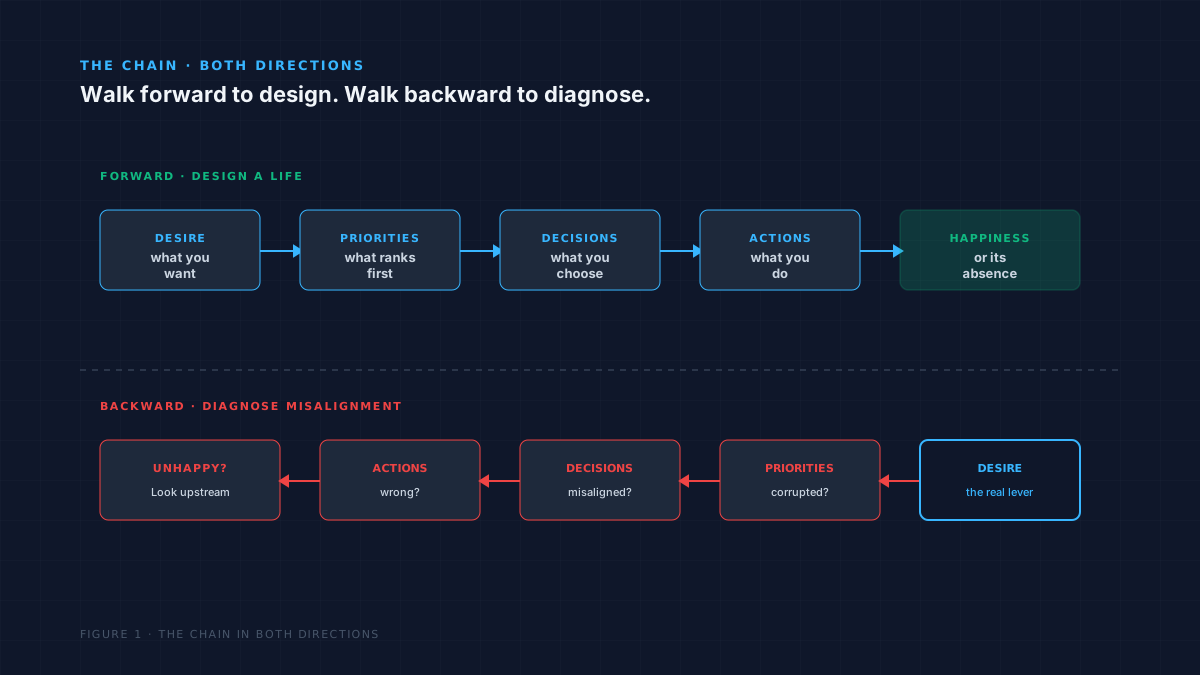
- DESIRE — what you actually want, beneath the noise of what you think you should want.
- PRIORITIES — what desire ranks above everything else when forced to choose.
- DECISIONS — what priorities require you to choose, especially in moments of constraint.
- ACTIONS — what decisions demand you actually do, hour by hour, day by day.
- HAPPINESS — or its absence — depending on whether the actions match the desire that started the chain.
Walking It Backward
The chain is most useful as a diagnostic. When something feels off — when the win didn't feel like the win you expected, when the success doesn't seem to deliver — walk the chain backward.
Unhappy? Look at your actions. Wrong actions? Look at your decisions. Wrong decisions? Look at your priorities. Wrong priorities? Look at what you actually desire — not what you say you desire.
Most people get stuck because they try to fix happiness directly. Take a vacation. Buy a thing. Start a side project. None of those work if the actions, decisions, priorities, and underlying desire aren't aligned. The real lever is upstream — and the chain tells you which link to fix.
Where Leaders Get Trapped
The most common trap for principals and founders: their DESIRE was "build something meaningful that gives me freedom." That desire set the PRIORITIES (start the business, scale it, hire a team). The priorities drove DECISIONS (work harder, take on more, stay in every meeting). The decisions produced ACTIONS (15-hour days, missed dinners, weekends in the office).
And the HAPPINESS the chain was supposed to produce never arrives — because somewhere between the desire and the actions, the chain got corrupted. The actions no longer serve the desire. They serve the business. And the business has become a separate thing demanding its own actions, regardless of what the leader actually wants.
The actions started serving the business instead of the leader who started the business. The chain still runs — but it's pointing at the wrong destination.
What Realignment Looks Like
Realignment isn't motivational. It's structural. Three architectural changes typically restore the chain:
- Make the business produce the freedom the desire required — through architecture (intelligence layer, signal engine, codified standards) so the leader is no longer required in every action.
- Re-anchor the priorities to what the actual desire was, not what the business has come to demand. "Be present for family" is a priority. "Answer every email within an hour" is the business's priority masquerading as yours.
- Audit the actions in real time against the priorities. If your calendar shows you spent 80% of last week on things that don't serve your stated priorities, the chain is corrupted. The data doesn't lie.
The Real Test
When the chain is aligned, the actions feel like they're serving the desire — even on hard days. The work has weight. The decisions feel right. The priorities feel like priorities. The desire feels honest.
When the chain is corrupted, every link points somewhere else. The actions serve the business. The decisions serve the business. The priorities serve the business. And the original desire — the one that started everything — is buried so deep that most leaders forgot what it was.
Walking the chain backward is how you find it again.
Why This Matters for the Business We Build
Xeedly exists because the architectural fix is real. When operational intelligence, signal engines, and codified standards remove the leader from the middle of every action, the chain has a chance to realign. The business stops being a separate thing demanding its own actions and starts being a catalyst for the life the leader actually wanted to build. Five live deployments across multi-unit restaurants, HOA management, property management, real estate investing, and the Xeedly platform itself.
Questions, answered.
- What is the Desire → Priorities → Decisions → Actions → Happiness framework?
- A simple chain that traces how life happens. What you desire shapes what you prioritize. What you prioritize shapes how you decide. How you decide shapes what you do. What you do shapes whether you're happy. The chain runs forward to design a life and backward to diagnose why the life you have doesn't match what you wanted.
- How do you walk the chain backward?
- Start with the symptom and work upstream. Unhappy? Look at your actions. Wrong actions? Look at your decisions. Wrong decisions? Look at your priorities. Wrong priorities? Look at what you actually desire — not what you say you desire or think you should desire. The real lever is almost always upstream of where you started.
- Why does success often not bring the happiness people expect?
- Usually because the chain got corrupted somewhere. The actions started serving the business instead of the leader who started the business. The original desire is still in there, but the daily actions are pointing somewhere else entirely. Walking the chain backward exposes the corruption point.
- Is this framework religious or spiritual?
- The framework is universal — it describes how human action and meaning connect regardless of worldview. Many traditions (Christian, Stoic, Buddhist, secular ethical) articulate something close to this chain. The Xeedly framing emphasizes the practical implication: align the chain by making the business serve the leader rather than consume them.
- How does business architecture connect to this framework?
- Most leaders' chains get corrupted because the business they built demands actions that no longer serve the priorities they set out with. Intelligence layers, signal engines, and codified standards remove the leader from the middle of every action — which gives the chain a chance to realign. The architecture is the fix; the chain is the diagnostic.
Ask anything about this briefing.
I've read it. I can synthesize, expand on any section, or point you to related briefings.
If the chain is corrupted, the architecture has to change
Walk your chain backward. If the actions don't serve the desire that started it all, the fix isn't motivational — it's structural. Tell us about your business and we'll show you what realignment would look like architecturally.
More from PRINCIPAL-LIFE

The Margin Equation: Calendar, Attention, Presence
Most leaders optimize for financial margin and ignore the three margins that actually determine quality of life.

Productivity Is a Responsibility. But It's Not an Identity.
Most high-achieving leaders confuse being productive with being themselves. The conflation costs them when productivity inevitably hits a wall.

Why Success Doesn't Fix the Things You Hoped It Would
The wins are real. The trophies are deserved. And the fulfillment most leaders expected to find doesn't arrive. Here's why.