
Catalyst, Not Cage: Reframing What a Business Is For

A business should be a catalyst for the person who built it — the means by which they become who they were made to be — not a cage that consumes them. Most leaders accidentally build cages because the systems running their businesses require their constant presence. The fix is structural, not motivational.
The Slow Build of a Cage
Most leaders don't build cages on purpose. They build systems. The systems work. So they build more systems. Each one solves a real problem. Each one makes the business better.
Then one day they wake up and realize the business they built to give them a better life is the thing standing between them and the life they wanted.
The systems are working. The team is performing. Revenue is growing. From outside, everything looks like success. From inside, the leader is the bottleneck in their own success — present in every decision, indispensable to every system, captive to the thing they built to set them free.
A business is a catalyst when it gives back more than it takes — time, attention, presence, the capacity to do what you were made to do. A business is a cage when it consumes more than it gives.
The Responsibility Without the Identity
We have a real, God-given responsibility to be productive — to provide for our families, to serve others, to be self-sufficient. That's not in question.
But productivity that consumes the producer is a corruption of that calling, not a fulfillment of it. A business that requires you to be present in every moment, in every decision, in every fire — that business is no longer a tool. It's a cage you built for yourself.
The distinction matters because both versions can produce strong financial results. The cage version often produces them faster — for a while. But the leader pays the difference in their actual life, and over time the cost compounds.
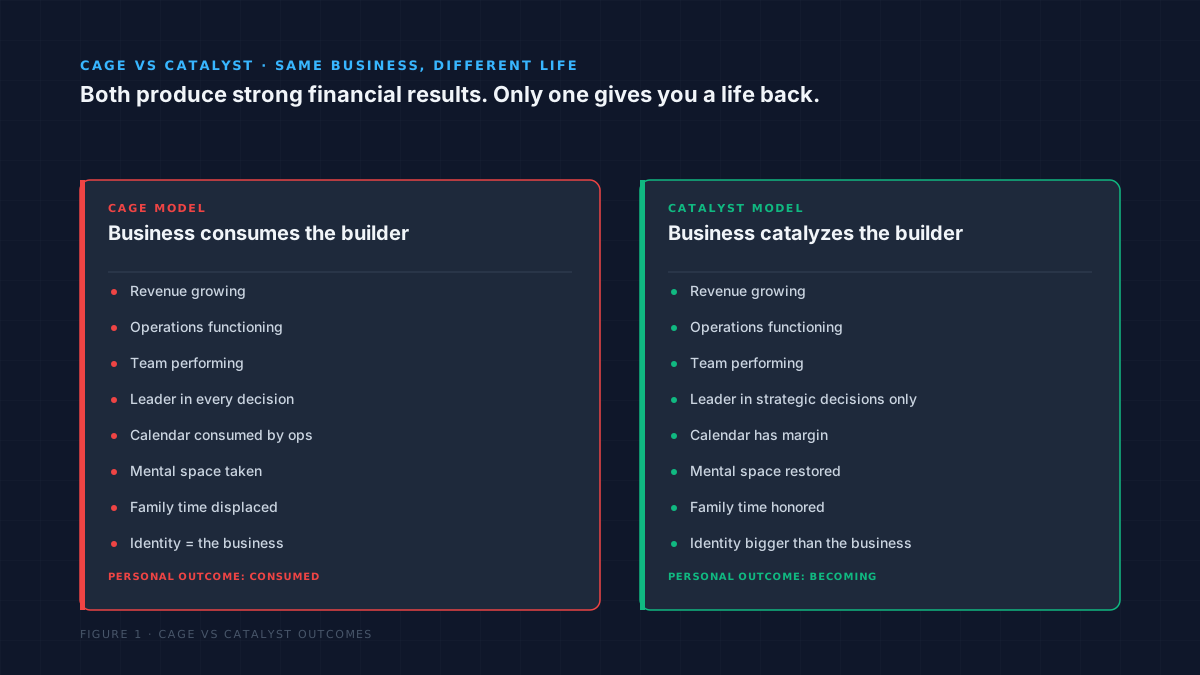
What Catalyst Actually Looks Like
A business that functions as a catalyst has four observable properties:
1. Time given back
Not vacation time. Daily margin. The hours that used to be consumed by operations now go to family, faith, friendships, service, rest — the things only you can do for the people only you can do them for.
2. Attention freed
Not just availability — actual capacity to be present. The leader who's not mentally running through tomorrow's problems while sitting at dinner. The leader who can be in the room with the people they love because the system isn't pulling at them.
3. Strategic space
Room to think long-term. To take the calls that move the company forward instead of the calls that put out today's fires. The work only you can do, getting done.
4. Becoming
The leader is becoming someone — growing into who they were made to be. The business is part of that becoming, not the cap on it. The work is forming character, not consuming it.
How the Shift Happens
The catalyst shift isn't motivational. It's structural. Three architectural changes turn most cages into catalysts:
- The information goes to the people who need it — not just to you. An intelligence layer that delivers operational visibility to the team members who can act on it, in the channels they already use, removes you from the middle of cross-functional decisions.
- The exceptions get surfaced — the routine gets handled — a signal engine that knows what's normal vs. notable means your team stops escalating uncertainty as if it were exception. Your inbox stops being a triage queue.
- The standards live in the system — not in your head. Quality stays consistent because the standard is retrievable without retrieving you. Decisions get made by the people closest to them because they have the standard.
These three changes don't free you to do less. They free you to do the work only you can do — the strategic work, the relational work, the work that requires the leader's actual presence to be done well.
The Mission Beyond the Business
When the cage opens — when the business genuinely runs without you in the middle of everything — a question arises: what do I do with this?
Some leaders use the margin to build the next thing. Some use it to scale the current thing in healthier ways. Some use it to invest in their family, faith, community, or service in ways they couldn't before. Some use it to recover from the years they spent in the cage.
All of those are valid. The point isn't to prescribe what you do with the freedom. The point is that you have it — and that you built a business that gave it to you, instead of one that took it from you.
If your business gave you back ten hours a week of real, undistracted time, what would you do with them? If the answer is something meaningful — and your business doesn't give you those hours — you're in a cage. Time to change the architecture.
Why XeedlyAI Exists
Xeedly was built on the conviction that the best businesses are catalysts, not cages. Every product line — intelligence platforms (Sovvrn, Propertyolio), revenue-generating SaaS products (PropertyDocz, PropertyJobz), automated growth systems, custom operational builds — exists to remove the leader from the middle of everything so they can lead, be present, and focus on what matters most. Five live deployments across multi-unit restaurants, property management, HOA operations, real estate investment, and the Xeedly platform itself. Same architecture, different verticals, one thesis.
Questions, answered.
- What does it mean for a business to be a catalyst?
- A catalyst is a business that gives back more than it takes — time, attention, presence, the capacity to do what you were made to do. The business produces results without consuming the person who built it. The opposite is a cage — a business that requires the leader's constant presence and consumes them in the process.
- How can I tell if my business is a cage?
- Five signs: your inbox is mostly decision requests that should resolve without you; you can't take a vacation without things falling apart; your standards live in your head; your calendar is consumed by daily operations with no room for strategic work; doubling the business would make you more of the bottleneck, not less. If most of those are true, the cage is structural.
- Is it possible to have a successful business that's also a catalyst?
- Yes — that's the entire point. Catalyst businesses often outperform cage businesses long-term because the leader has time and attention to do the work that actually moves the company forward. The cage version produces fast results for a while; the catalyst version compounds. They're not in tension with success — they're in tension with the leader's bandwidth model.
- Do I need to be a founder or principal for this to apply?
- No. The catalyst-vs-cage frame applies to anyone who has been the operational engine of a business — founders, owners, managing partners, principals, operators, executives. The structural traps that create cages don't care about title.
- How do you actually shift from a cage to a catalyst?
- Three architectural changes: route operational information to the people who can act on it (not just to you), build a signal engine that distinguishes normal from notable so your team stops over-escalating, codify standards into the system so quality doesn't depend on your presence. Done together, these three changes dissolve the structural dependency.
Ask anything about this briefing.
I've read it. I can synthesize, expand on any section, or point you to related briefings.
Build the catalyst, not the cage
Tell us about your business. We'll show you what the architecture would look like for your operation — and how the shift from cage to catalyst actually happens.
More from PRINCIPAL-LIFE

The Margin Equation: Calendar, Attention, Presence
Most leaders optimize for financial margin and ignore the three margins that actually determine quality of life.

Productivity Is a Responsibility. But It's Not an Identity.
Most high-achieving leaders confuse being productive with being themselves. The conflation costs them when productivity inevitably hits a wall.

Why Success Doesn't Fix the Things You Hoped It Would
The wins are real. The trophies are deserved. And the fulfillment most leaders expected to find doesn't arrive. Here's why.