
Vendor Compliance at Scale: The Quiet Liability in Property Management

Vendor compliance — insurance certificates, license verifications, W-9s, workers' comp — degrades silently across a property management portfolio because the work is fragmented across dozens of vendors and dozens of properties. The liability doesn't surface until a claim, by which time the gap has been open for months. Automated compliance tracking with real-time expiry alerts is the structural fix.
The Liability Most Principals Underestimate
If you run a property management firm with 25+ communities and a vendor pool of 50–100 active vendors, you have somewhere between 200 and 400 compliance documents that need to be current at any given moment. General liability policies. Workers' comp certificates. Trade licenses. W-9s. Workers' insurance for subcontractors. Auto policies for vendors doing on-site service.
Each document has its own expiration date. Each vendor renews on their own cycle. Each property has its own insurance requirements. The combinatorial complexity is what makes manual tracking fail — not the difficulty of any individual document, but the volume across the matrix.
When an uninsured vendor causes damage on a community property, the liability shifts to the management company by default. Most management agreements include indemnification clauses that assume the management company verified vendor compliance. If you didn't catch the lapse, you carry the exposure.
Why Manual Tracking Fails Past 25 Communities
Manual compliance tracking — a spreadsheet, a shared folder, a calendar reminder system — works at small scale. Past 25 communities and 50 vendors, three structural failures appear:
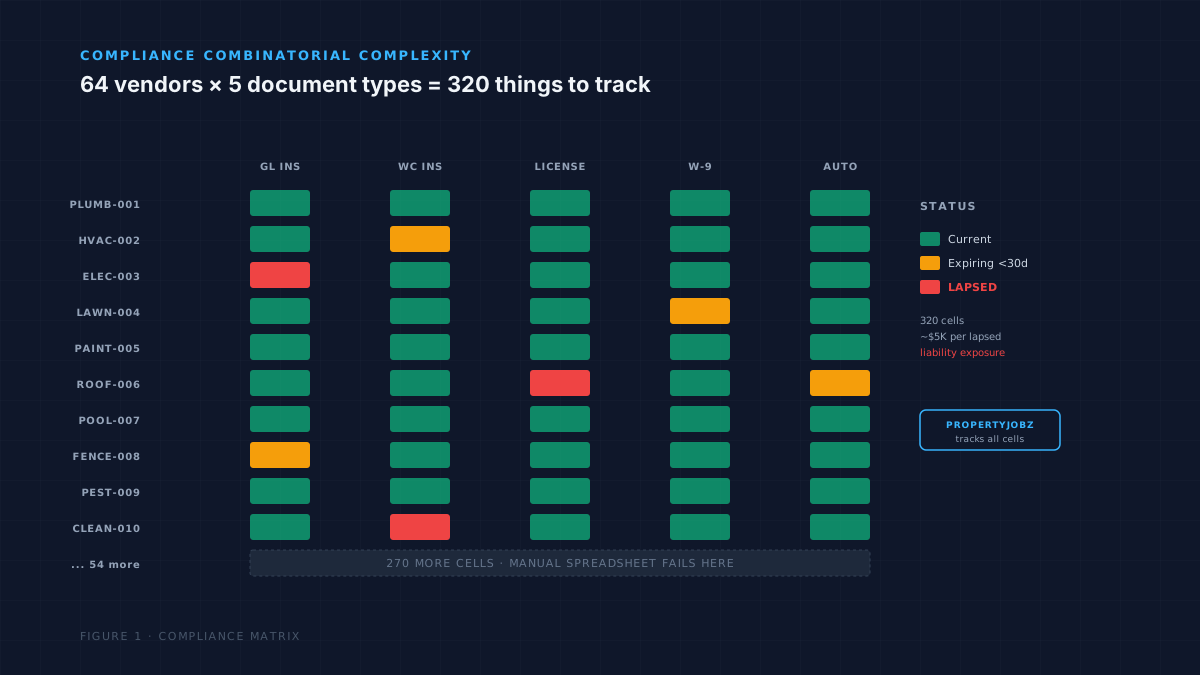
1. Expiry dates surface too late
Most spreadsheet-based systems catch lapses after they happen. The cell turns red on the day the certificate expired — not 30 days before. By the time someone notices, the vendor has already been on properties uninsured.
2. Vendor self-reporting goes unverified
Most management companies require vendors to upload renewal documents, then trust the vendor to do it on time. When the vendor doesn't, nobody knows until a board asks or a claim happens. The verification layer is missing.
3. Cross-property visibility is missing
A vendor's compliance status applies across every property they service — but most tracking systems are organized by property, not by vendor. A vendor lapsed at one community is lapsed at all of them, and the system doesn't catch it.
What Automated Compliance Tracking Looks Like
An automated vendor compliance system handles the three failures structurally:
1. Forward-looking expiry detection
The system tracks every compliance document's expiration date and surfaces upcoming expiries 30, 60, and 90 days out. Vendors get automated renewal reminders. Operations teams get a daily roll-up of what's expiring this week. Principals see a compliance dashboard with the current status of the entire vendor pool.
2. Verification automation
When vendors upload renewal documents, an AI-powered verification step extracts the relevant fields (policy number, effective dates, coverage limits, named insured) and flags anything that doesn't match the property's requirements. Manual verification time per renewal drops from 15 minutes to 1 minute of review.
3. Vendor-centric data model
Compliance is tracked at the vendor level, not the property level. A vendor's status updates everywhere they're active. When a vendor lapses, the system pulls them from active service across all properties until they're compliant again.
The Revenue Side of Vendor Management
Automated compliance tracking solves the liability problem. But there's a second opportunity in vendor management most principals miss: the work you're already doing — verifying vendors, maintaining a curated pool, routing work to qualified providers — has real economic value to the vendors themselves.
A structured preferred-vendor program with verified compliance, marketing visibility, and job-routing creates a marketplace vendors are willing to pay to be part of. It's not a toll booth — it's a managed program with real value: compliance maintenance, preferred status, qualified leads, and access to a curated set of communities.
The automated compliance tracking that closes your liability exposure is the same architecture that enables a revenue-generating vendor marketplace. The work is the same; the model converts the cost center into a revenue stream.
What the Architecture Requires
- Vendor onboarding workflow — structured intake that captures all compliance documents at signup, with templated requirements per property type
- Document parsing engine — AI-assisted extraction of fields from uploaded certificates so verification happens in seconds, not minutes
- Expiry calendar with automated alerts — vendors notified 60/30/14/7 days before expiration; ops team daily roll-up of pending lapses
- Compliance status surfacing — every place a vendor is referenced (work orders, marketplace listings, principal dashboard) shows current compliance status in real time
- Cross-property propagation — a vendor's lapse updates everywhere they're active without manual intervention
- Optional marketplace layer — preferred-vendor program with tiered access, marketing visibility, and structured payment for ongoing program participation
How XeedlyAI Built PropertyJobz
PropertyJobz is the vendor management platform XeedlyAI built for HOA management companies. Three integrated systems on one platform: vendor verification (insurance tracking with automated expiry alerts, license verification, W-9 management), preferred vendor program (curated marketplace with revenue-share access), and RFP/job management (job routing to qualified vendors with full audit trail). AI assistant on every admin and vendor dashboard. Multi-tenant with platform admin layer for managing organizations across the system. Stripe Connect for vendor payment workflows. Core HOA is the first management company live on the platform. Setup is $500 (limited-time, normally $1,500) with no monthly platform fees — revenue-share model.
Questions, answered.
- What does vendor compliance tracking actually include?
- General liability insurance certificates, workers' compensation policies, trade licenses, W-9s, auto insurance for vendors doing on-site service, and any property-specific requirements (e.g., bonding for certain trades). Each document has an expiration date that has to be tracked, and each property may have specific coverage minimums that have to be verified per vendor.
- Why does manual compliance tracking fail past 25 communities?
- The combinatorial complexity. With 25 communities and 50 active vendors, you have 200–400 compliance documents in active rotation, each with its own expiration date. Spreadsheets surface lapses after they happen rather than before, vendor self-reporting goes unverified, and compliance gets tracked by property instead of by vendor — meaning lapsed vendors slip through.
- What's the actual liability exposure from vendor compliance lapses?
- When an uninsured vendor causes damage on a community property, the liability shifts to the management company by default. Most management agreements include indemnification clauses that assume the management company verified vendor compliance. A single uninsured incident can easily run six figures in claims and legal exposure.
- How does an automated vendor compliance system work?
- Three structural changes: forward-looking expiry detection (30/60/90 day alerts), AI-powered document verification (extracts fields automatically), and a vendor-centric data model (vendor status updates everywhere they're active). Vendors get automated renewal reminders; ops teams get daily roll-ups; principals see real-time portfolio compliance status.
- Can vendor compliance tracking also generate revenue?
- Yes. The same architecture that closes liability exposure enables a preferred-vendor program — vendors pay for verified marketplace access, preferred status, and qualified job routing. Same work, different model: convert the compliance cost center into a revenue stream. PropertyJobz handles both layers on one platform.
Ask anything about this briefing.
I've read it. I can synthesize, expand on any section, or point you to related briefings.
Close the compliance gap. Open the revenue stream.
Tell us how many communities you manage and roughly how many vendors are in your pool. We'll map what automated compliance tracking — and the optional vendor marketplace — would look like for your firm.
More from MULTI-UNIT-OPS
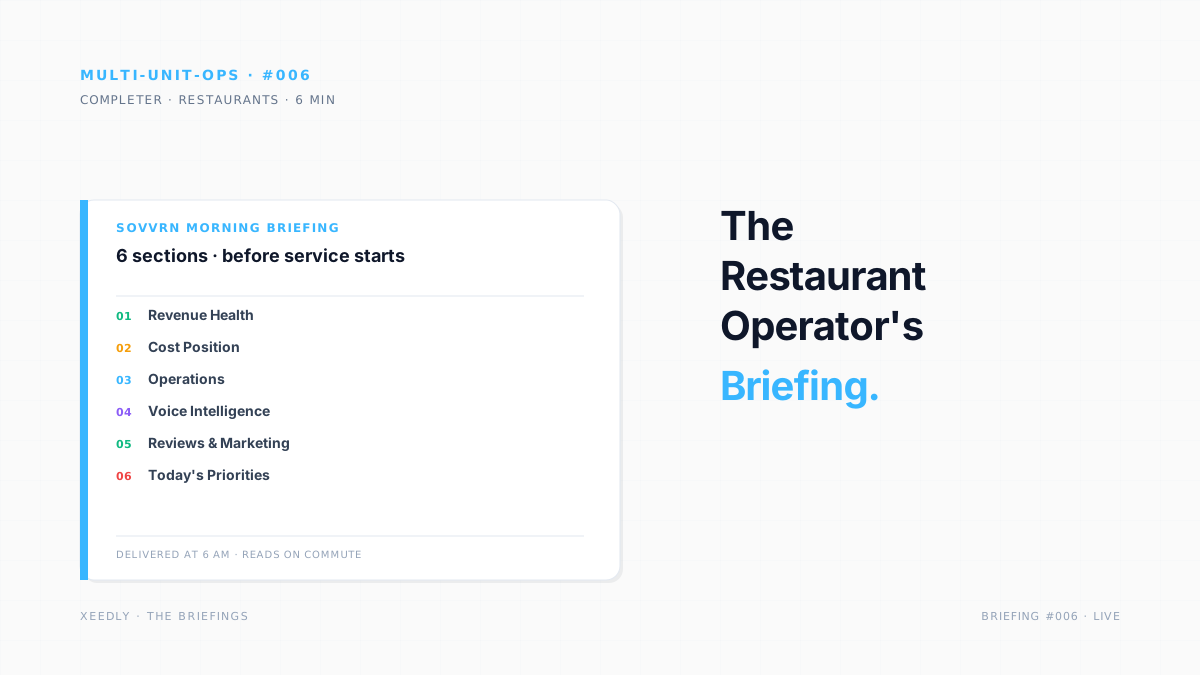
The Restaurant Operator's Morning Briefing: Six Sections That Matter
What multi-unit restaurant operators need at 6 AM before service starts. Six sections, prioritized by signal, delivered where they already work.
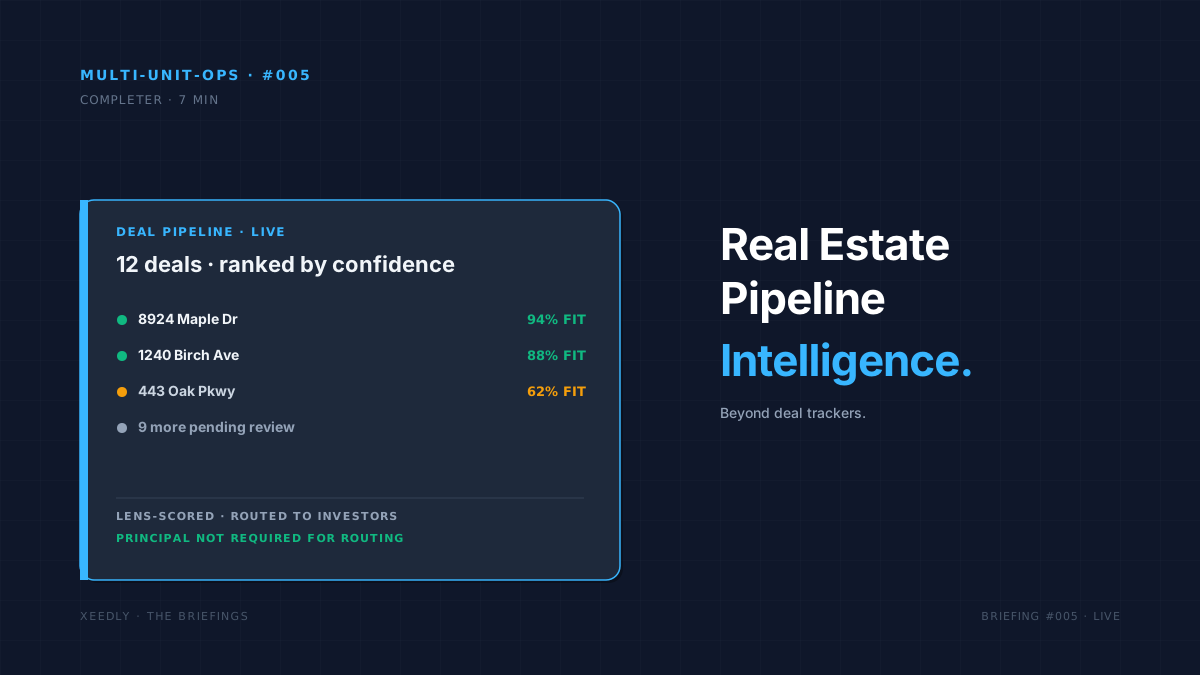
Real Estate Investment Pipeline Intelligence: Beyond Deal Trackers
Real estate investment principals run pipelines on tools that weren't built for deal-stage signal detection. Here's what fits how investors actually decide.
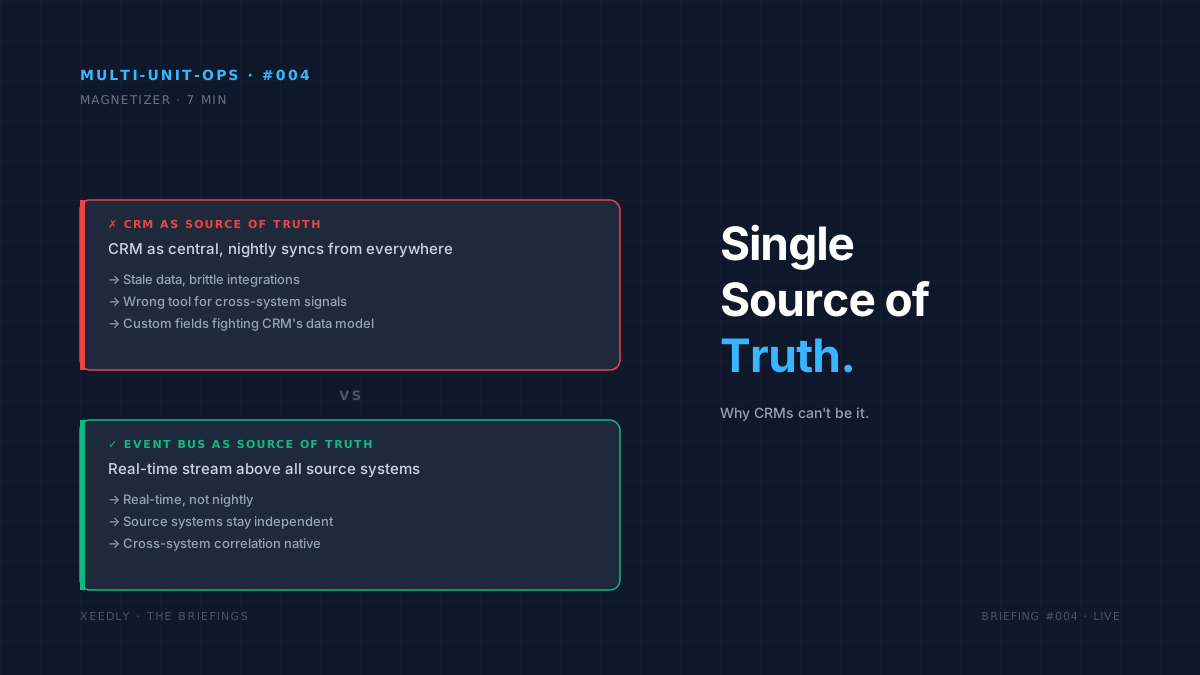
The Single Source of Truth Problem (And Why CRMs Don't Solve It)
Every operational business eventually wants a single source of truth. Most try to make their CRM that source. Most fail.