
Reviews, Routing, and Response Time: The Three Levers of Home Services Growth

Three operational levers drive home services growth more than any marketing channel: review volume and recency (where Google ranks you), route density (margin per truck-hour), and response time (close rate on inbound leads). Each is operational — not marketing — and each has a much higher ROI than spending more on Google Ads or Yelp. Operations IS marketing for home services.
The Marketing Trap
Most home services marketing advice points to the same channels: Google Ads, Yelp, Angi, Facebook, Nextdoor. The economics range from poor to terrible. $80–$150 per lead. 20–30% conversion to job. Increasing competition driving CPC up year over year.
The contractors who consistently outgrow their market aren't winning by spending more on those channels. They're winning by three operational levers that compound:
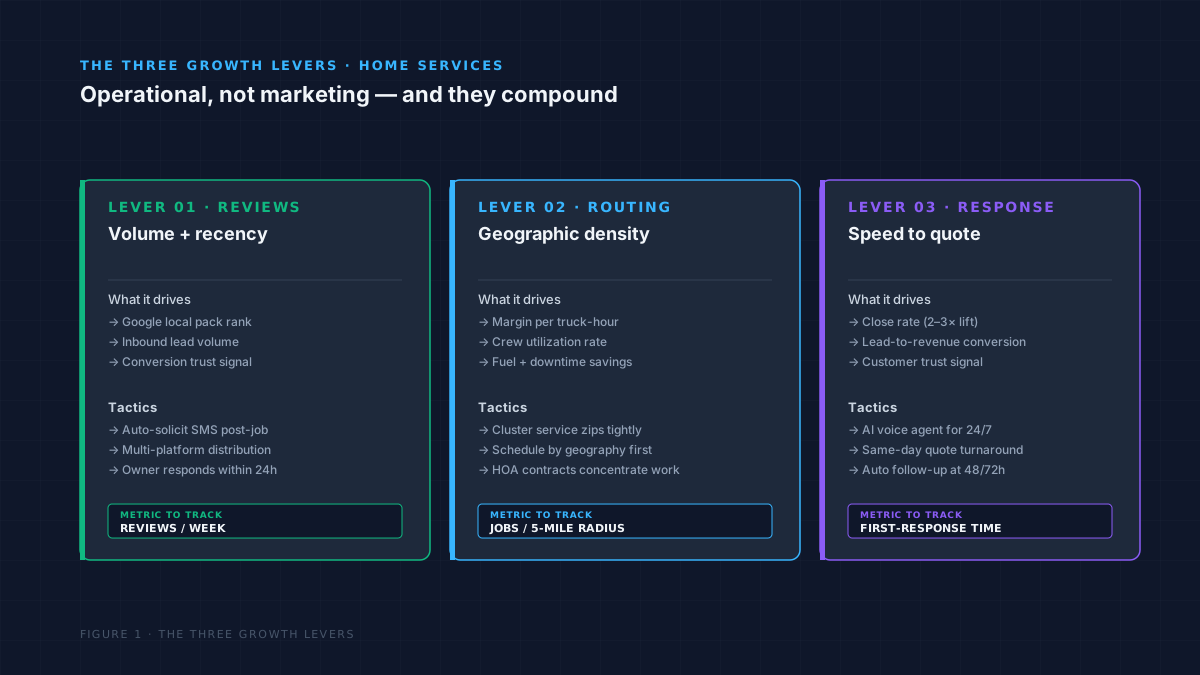
Lever 1: Review Volume and Recency
Google's local pack and Maps results are driven heavily by review signals: total volume, recency, response rate, and rating. A contractor with 200 recent (last 90 days) reviews averaging 4.7 stars will outrank one with 800 lifetime reviews if the lifetime contractor stopped collecting recent ones.
The operational practice
- Automated review solicitation after every job. SMS or email request goes out 1–4 hours after job completion — when customer satisfaction is highest.
- Multi-platform spread. Don't put all reviews on Google. Distribute Google, Yelp, Facebook, Angi, BBB based on which platforms your buyers actually use.
- Owner response to every review within 24 hours, especially negative ones. AI-assisted response generation makes this scalable.
- Track review velocity as a leading indicator. New reviews per week = next month's lead flow.
Lever 2: Route Density
A truck doing 8 jobs in a 5-mile radius produces dramatically better margin than the same truck doing 8 jobs across 25 miles. Route density — the geographic concentration of jobs per crew per day — is the single largest operational margin driver in home services.
The operational practice
- Cluster service areas tightly rather than chasing every job in every zip code. Better to dominate 3 zip codes than to be thin in 12.
- Schedule by geography first, then by time — group jobs in the same area on the same day even if it means a 2-day wait.
- Reward route density in pricing. Same-day add-on jobs in the same neighborhood at a premium discount — capture the unit economics.
- HOA preferred vendor work multiplies this — a single management company with 10 communities concentrated in one suburb is a route density gift.
Landing one mid-sized HOA management company with clustered properties can lift route density 30–50% overnight — and that lifts margin per truck-hour faster than any marketing campaign possibly could.
Lever 3: Response Time
Speed-to-respond is the single largest predictor of close rate on inbound leads. Same-day quote follow-up closes at 2–3× the rate of week-old follow-up. Within-the-hour callback closes higher still.
The operational practice
- Answer the phone every time. AI voice agents make 24/7 pickup feasible at $200–$500/mo — far cheaper than the leads being lost to voicemail.
- Same-day quote turnaround. Site visit notes auto-populate a quote template; quote sends before the crew leaves the property.
- Automated quote follow-up at hour 48 and hour 72 — most lost quotes aren't 'no,' they're 'I forgot to respond.'
- Track time-to-first-response as a leading indicator of monthly revenue. The faster you respond, the higher your close rate, the more revenue per lead.
Why Operations Is Marketing
None of the three levers are marketing in the traditional sense. They're operational practices. But each one drives more growth than any equivalent ad spend would — and they compound.
More reviews → higher Google rank → more inbound leads. Higher route density → better margin → more capacity to invest in growth. Faster response → higher close rate → more revenue per lead. Each lever feeds the others.
Stop optimizing the ad budget. Start optimizing the operation. Operations IS marketing — the contractors that grow consistently are the ones whose ops are so dialed in that customers come back, leave reviews, and refer their neighbors.
How XeedlyAI Helps Move the Three Levers
Xeedly's Growth Systems (Get Found $299/mo, Get Chosen $499/mo) automate the operational practices that drive the three levers: AI-powered review generation after every job, AI-generated review responses, AI Chat and Voice agents for instant response, SEO and Google Business Profile optimization for local discoverability. For operators ready to move past Growth Systems into custom operational systems (route optimization, quote-to-cash automation), Operational Systems builds run $4K–$7K one-time. All built to compound — not just to look like marketing.
Questions, answered.
- What are the most important growth levers for a home services business?
- Three: review volume and recency (drives Google rank and inbound leads), route density (drives margin per truck-hour), and response time (drives close rate on inbound leads). Each is operational rather than marketing — and each has higher ROI than spending more on Google Ads or Yelp.
- Why are operational levers better than marketing spend for home services?
- Three reasons: (1) lower cost per outcome — automated review solicitation costs cents per review vs $80+ per ad lead; (2) compounding effect — more reviews drives more rank drives more leads; (3) durable — the gains stick after you stop spending, unlike paid ads which evaporate when the budget stops.
- How does route density affect home services profitability?
- Dramatically. A truck doing 8 jobs in a 5-mile radius can have 50%+ higher margin per truck-hour than the same truck doing 8 jobs across 25 miles. Less drive time, less fuel, less downtime. HOA preferred vendor work concentrated in one suburb is a route density gift — landing one good HOA contract can lift portfolio margin overnight.
- How fast should a home services business respond to inbound leads?
- Faster is always better. Same-day quotes close at 2–3× the rate of week-old quotes. Within-the-hour callbacks close higher still. The benchmark to beat: answer every phone call within 2 rings (AI voice agents make this feasible 24/7), send quotes same-day, and follow up on outstanding quotes at hour 48 and hour 72.
- Should I stop running Google Ads for my contracting business?
- Not necessarily — but make sure the three operational levers are dialed in first. Most operators get 3–5× better ROI by fixing review velocity, route density, and response time than by adding more ad budget. Once those are working, paid ads layered on top compound. Backwards order doesn't work — ad-driven leads bounce off slow response and weak reviews.
Ask anything about this briefing.
I've read it. I can synthesize, expand on any section, or point you to related briefings.
Compound the operational levers
Tell us your trade, service area, and current monthly call volume. We'll map which of the three levers (reviews, routing, response) has the biggest opportunity in your operation right now — and the fastest path to move it.
More from MULTI-UNIT-OPS
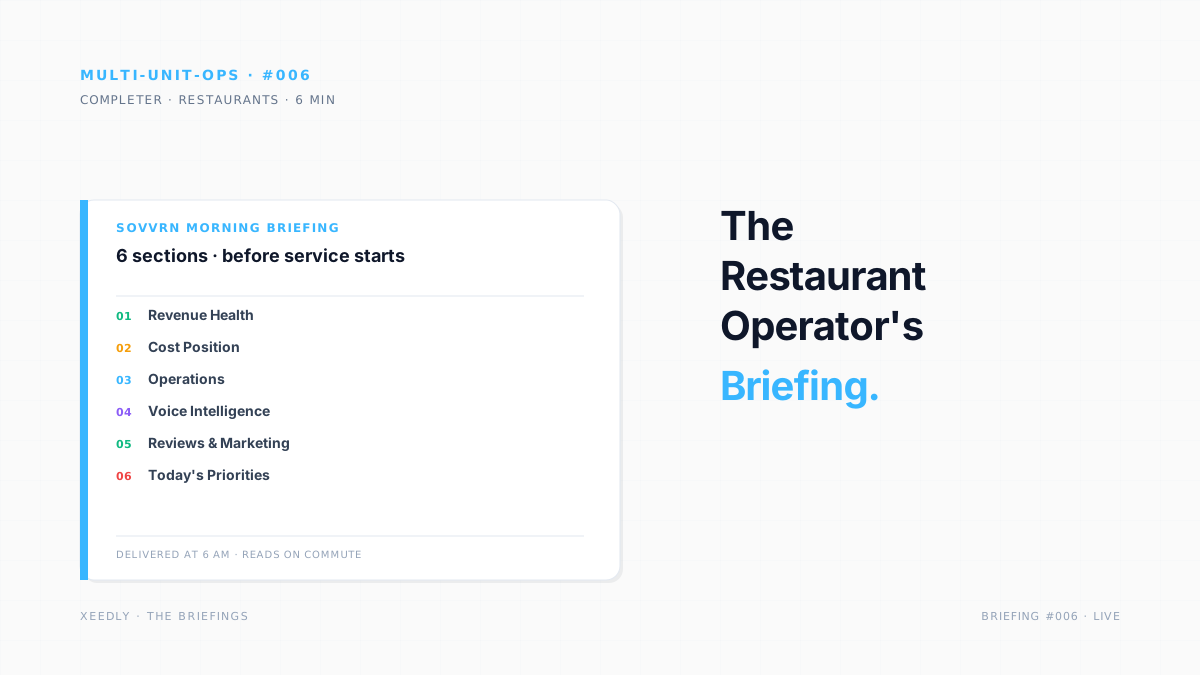
The Restaurant Operator's Morning Briefing: Six Sections That Matter
What multi-unit restaurant operators need at 6 AM before service starts. Six sections, prioritized by signal, delivered where they already work.
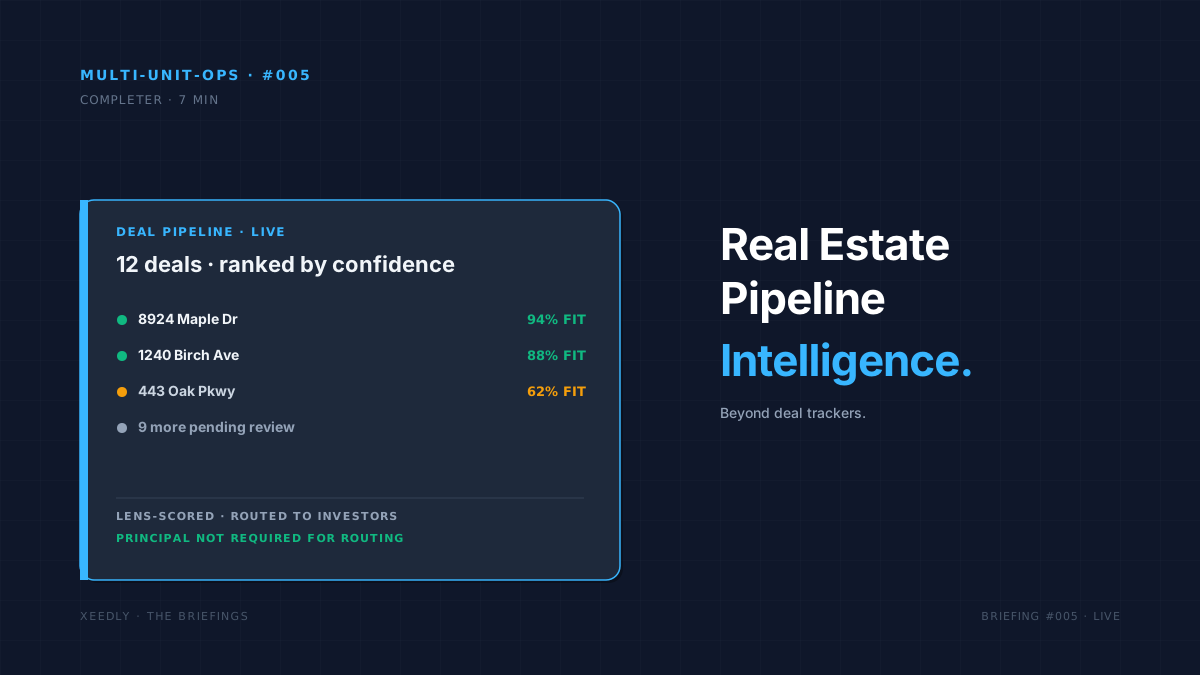
Real Estate Investment Pipeline Intelligence: Beyond Deal Trackers
Real estate investment principals run pipelines on tools that weren't built for deal-stage signal detection. Here's what fits how investors actually decide.
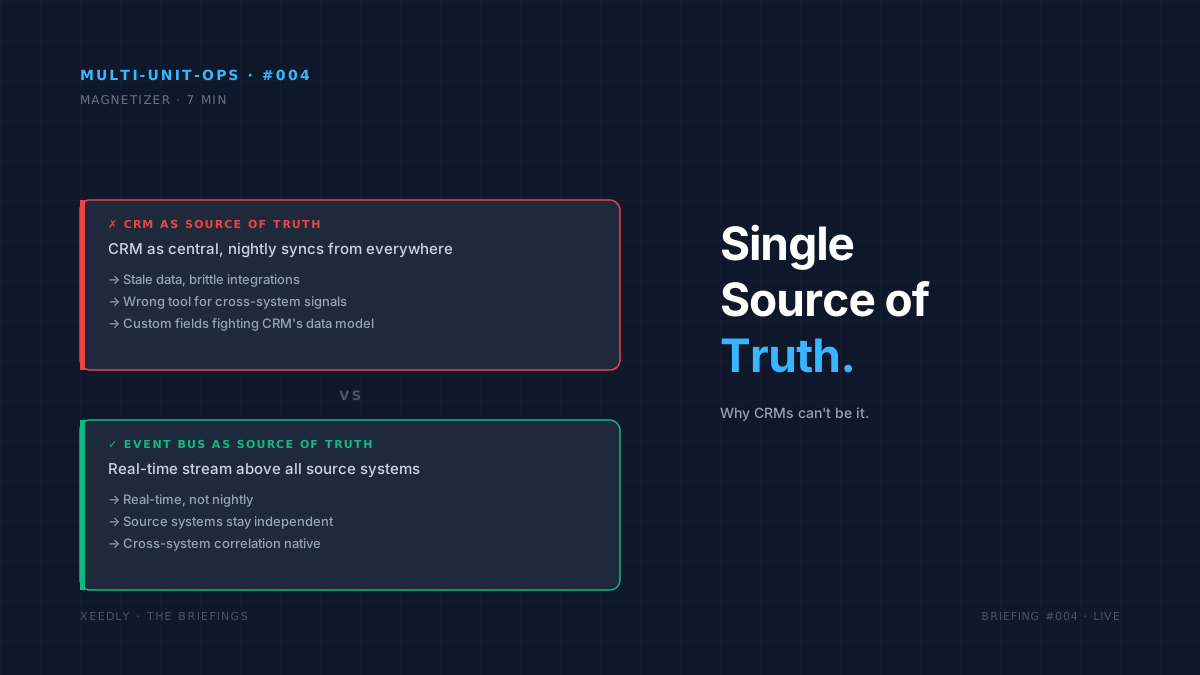
The Single Source of Truth Problem (And Why CRMs Don't Solve It)
Every operational business eventually wants a single source of truth. Most try to make their CRM that source. Most fail.