
The Multi-Unit Bottleneck: Why You Become the Constraint at 5+ Units

Multi-unit businesses hit a structural wall somewhere between 5 and 10 units where the leader becomes the operational bottleneck. The cause isn't effort or competence — it's that the systems used to run 1–4 units (heroic owner attention, shared spreadsheets, ad-hoc Slack updates) don't scale past that point. Adding headcount makes it worse. The fix is architectural.
The Wall Most Operators Hit
Running 1–4 units of anything — restaurants, properties, service locations, real estate deals — is a different business than running 5+. Up to 4, the leader's working memory is the operating system. They know each unit, each manager, each customer pattern. They can scan it all in their head and intervene where needed.
Past 5 units, that breaks. There are too many parallel operations to hold in mind. Decisions start getting made on incomplete information. The leader's calendar fills with status updates instead of strategic work. Quality drifts unit-to-unit because the standard lives in the leader's head and can't be replicated at scale.
The breaking point isn't exactly 5 units — it varies by industry, business model, and team — but it falls in the 5–10 unit range for almost every operational business. Once you're past it, the leader becomes the constraint whether or not they realize it.
Why Adding Headcount Makes It Worse
The intuitive response to becoming a bottleneck is to hire more people. Add a regional manager. Add an operations director. Add a chief of staff. The expectation: more people = less load on the leader.
What actually happens: each new person introduces another communication path that routes through the leader, because nobody else has full visibility into operations. The regional manager brings problems to the leader. The operations director needs leader input on cross-functional decisions. The chief of staff escalates anything that touches strategy. The bottleneck doesn't go away — it gets deeper because the leader is now coordinating more coordinators.
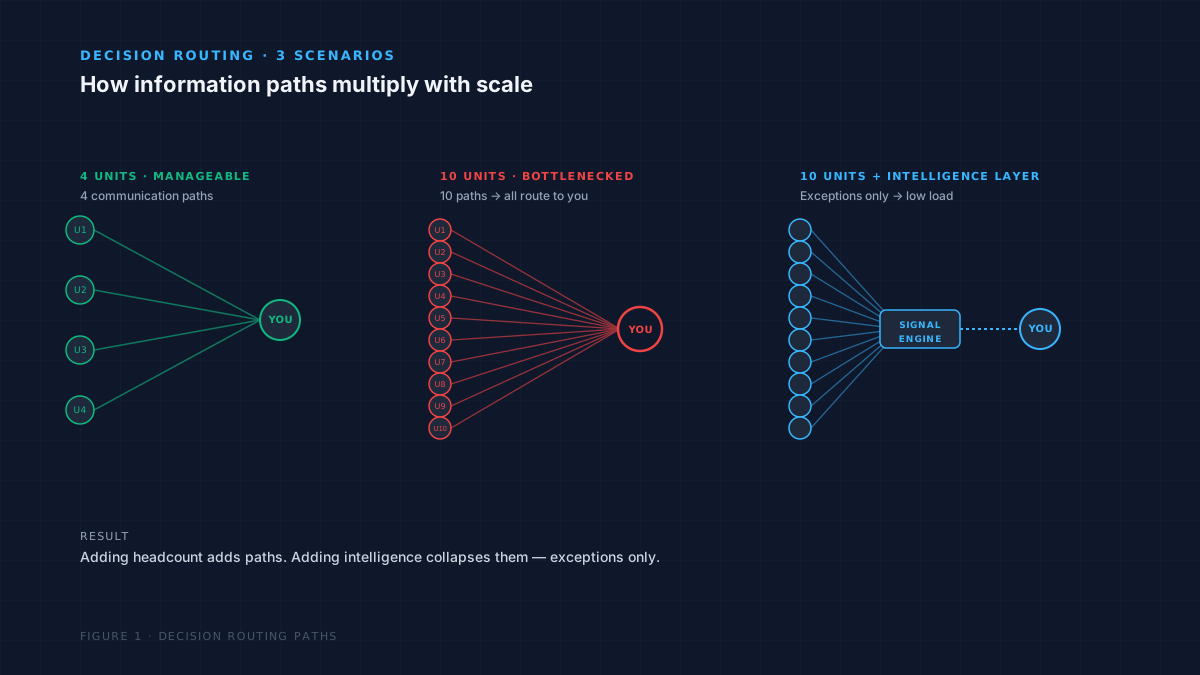
This is why "just delegate more" advice fails for multi-unit principals. The architecture creates the bottleneck. Delegation can't fix it without first fixing what each delegate has visibility into.
What Causes the Bottleneck (Three Root Causes)
1. Fragmented data across tools
Each unit's data lives in its own system. POS at one unit. Property management software at another. Vendor portal somewhere else. Spreadsheets for whatever doesn't fit. The leader is the only person with login credentials to all of them — so the leader is the only person who can see the full picture. Every cross-system question routes to the leader by structural necessity.
2. Standards held in the leader's head
"How should we handle this" routes to the leader because the standard isn't written anywhere else. Quality drift happens unit-to-unit because each manager interprets ambiguity differently. The leader becomes the quality gate for every nontrivial decision.
3. No detection of what's normal vs. notable
Without a system that flags anomalies, every uncertainty looks like an exception. The team brings everything to the leader because they don't have a reliable way to tell what's worth escalating. The leader's inbox becomes a triage queue for things that shouldn't have been escalated at all.
The Architectural Fix
The bottleneck dissolves when three architectural changes happen — none of them are headcount changes:
- Unified event bus — every operational event from every system flows into one canonical stream. Cross-system visibility stops requiring multiple logins.
- Signal engine — rules and AI correlation detect what's notable vs. normal. The system surfaces exceptions; routine activity stays quiet. The team stops escalating things that should resolve at their level.
- Codified standards — "how we do things" lives in the system, not in the leader's head. Standards are retrievable without retrieving the leader. Quality stops drifting unit-to-unit.
With those three in place, the leader is no longer the cross-system visibility, the quality gate, or the exception filter. The bottleneck dissolves at the architectural layer — and now delegation actually works because each delegate has the visibility and standards they need to make decisions.
When the architecture is right, scale stops adding proportional complexity. Going from 10 units to 25 units doesn't require 2.5× the leader's attention. It requires 2.5× the same lightweight signal flow the system already handles.
When to Make the Investment
Most multi-unit leaders wait too long. The right time to build the architectural fix is when you're at 5–8 units and feeling the strain, not when you're at 20 units and drowning. The infrastructure scales; building it earlier means you scale with it.
If you're already at 15+ units and the bottleneck is acute, the build still makes sense — you'll see relief faster because the volume of operational events makes the signal engine more valuable. The window doesn't close. But the longer you wait, the more cost the cage extracts.
How Xeedly Removes the Multi-Unit Bottleneck
Xeedly's intelligence platform architecture (event bus + signal engine + multi-channel delivery) is the structural fix for the multi-unit bottleneck. Five live deployments across multi-unit restaurants (Sovvrn — multi-location operators), HOA management (PropertyDocz + PropertyJobz — multi-community management companies), property management (Core HOA — 40+ communities), and property investment (Pando — multi-deal pipeline). Same architecture, different verticals. Standup is 2–4 weeks for the core platform plus 1–2 weeks per integrated system. Most clients see the leader's escalation queue drop by 60–80% within the first month after deployment.
Questions, answered.
- Why does a multi-unit business become harder to run past 5 units?
- Up to 4 units, the leader's working memory is effectively the operating system — they can hold the state of each unit in mind. Past 5, that breaks. There are too many parallel operations to track manually, decisions get made on incomplete information, and the leader becomes the bottleneck for cross-unit visibility. The cause is architectural, not effort.
- Will hiring more managers solve the bottleneck?
- Usually no. Each new person introduces another communication path that routes through the leader because nobody else has full visibility. The leader ends up coordinating more coordinators. Delegation can't fix the bottleneck without first fixing what each delegate has visibility into.
- What does it cost to fix the multi-unit bottleneck?
- An intelligence platform deployment runs $5K–$25K for most builds (2–4 week standup, 3–5 connected systems). Managed intelligence is $495–$995/mo ongoing. Compare to the cost of one wrong cross-system decision at 10 units or the cost of the leader being a bottleneck for 12 more months while the business scales.
- When is the right time to invest in the architectural fix?
- When you're at 5–8 units and feeling the strain — not when you're at 20 units and drowning. The infrastructure scales with you. Building it earlier means you scale with it instead of needing it.
- Does this work for property management and real estate, not just restaurants?
- Yes. The multi-unit bottleneck is structural — it applies to any portfolio business where the leader has to maintain visibility across many parallel operations. We've deployed across multi-unit restaurants (Sovvrn), multi-community HOA management (PropertyDocz, PropertyJobz, Core HOA), multi-deal real estate investment (Pando). Same architecture, different verticals.
Ask anything about this briefing.
I've read it. I can synthesize, expand on any section, or point you to related briefings.
Stop being the constraint
Tell us how many units you're running and where you feel the bottleneck most acutely. We'll map what an intelligence layer deployment would look like for your operation — and how fast the architecture pays back.
More from MULTI-UNIT-OPS
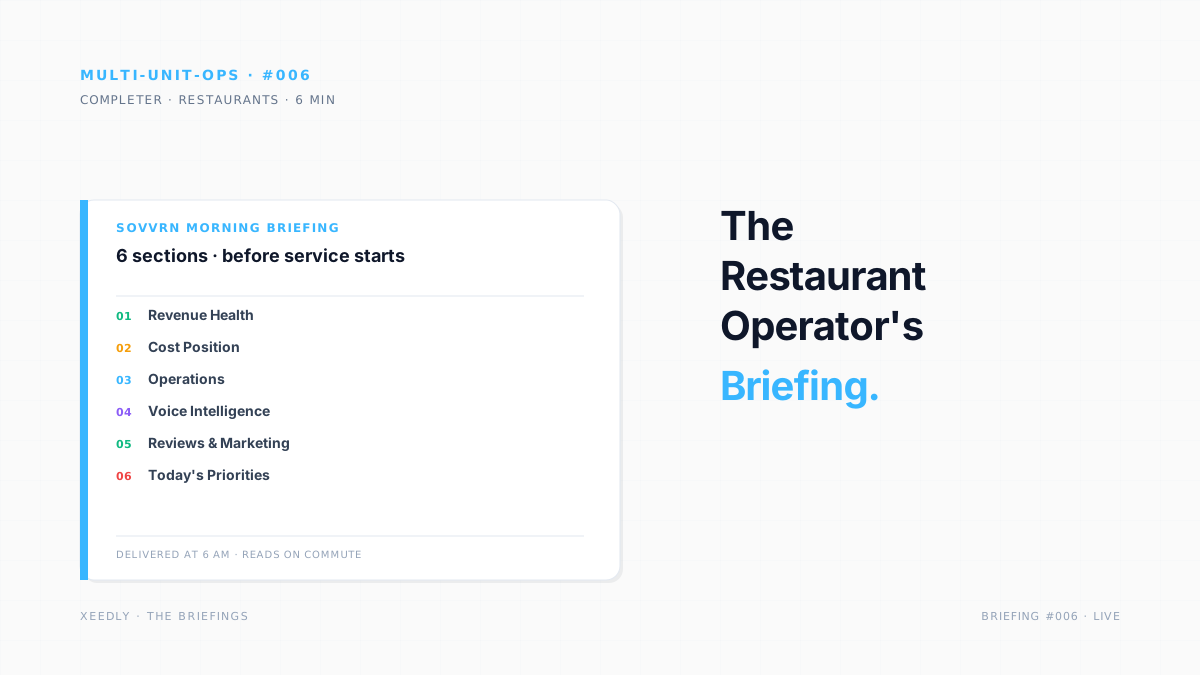
The Restaurant Operator's Morning Briefing: Six Sections That Matter
What multi-unit restaurant operators need at 6 AM before service starts. Six sections, prioritized by signal, delivered where they already work.
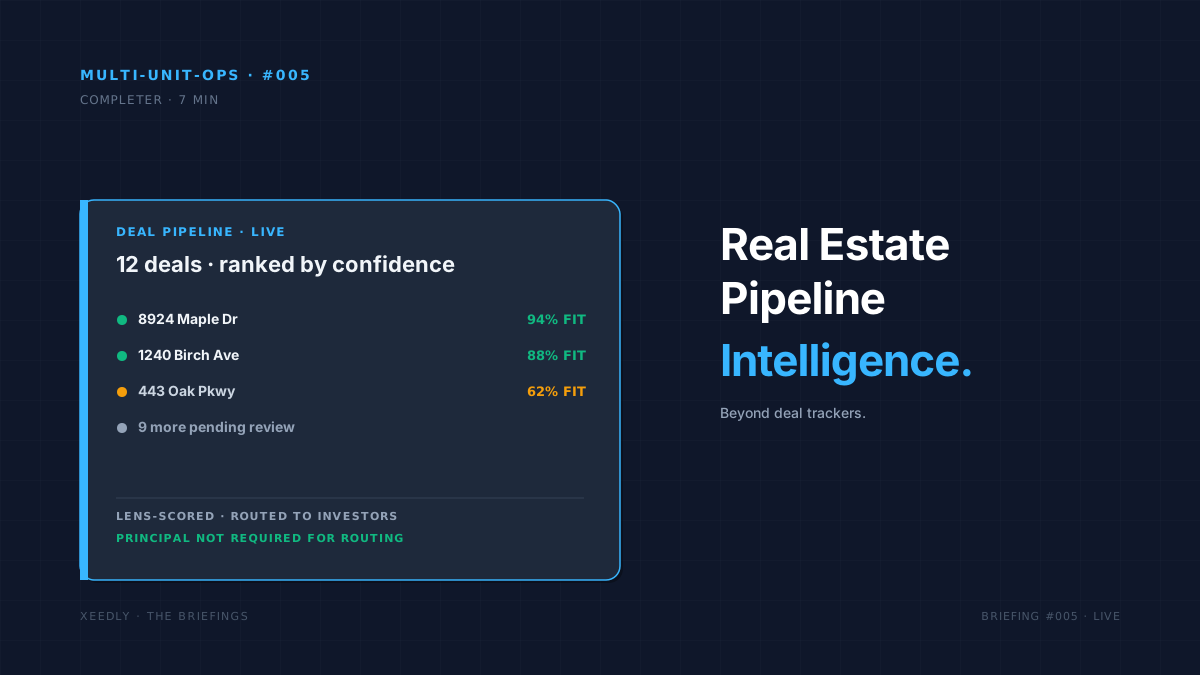
Real Estate Investment Pipeline Intelligence: Beyond Deal Trackers
Real estate investment principals run pipelines on tools that weren't built for deal-stage signal detection. Here's what fits how investors actually decide.
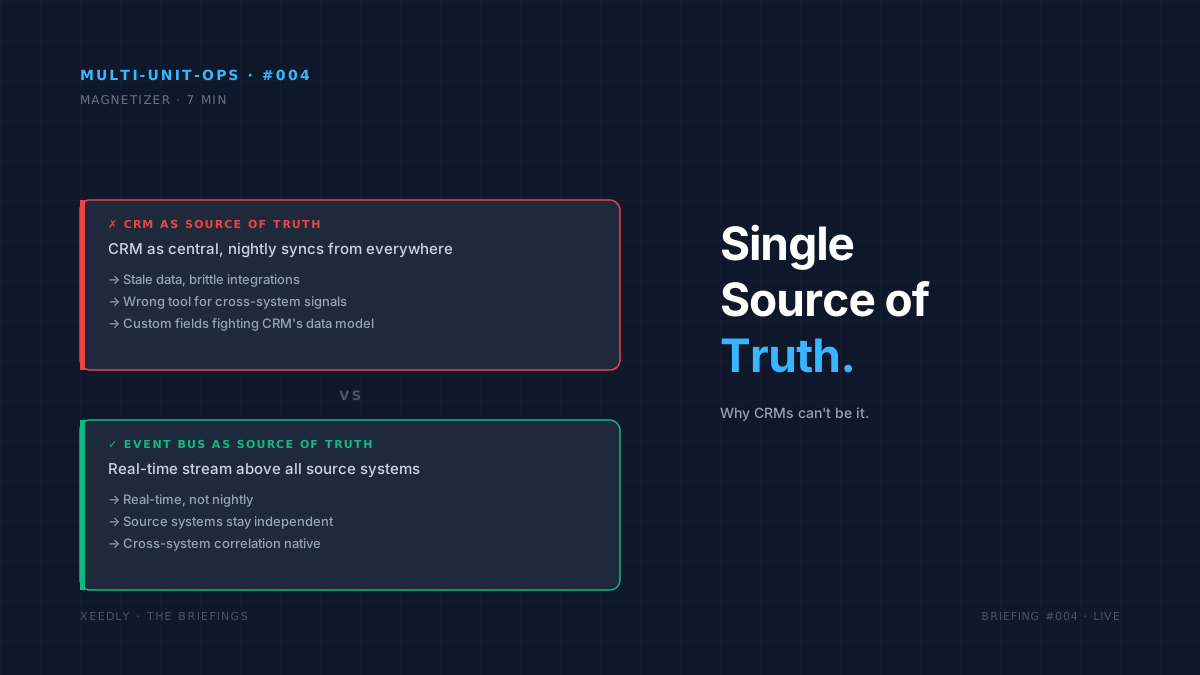
The Single Source of Truth Problem (And Why CRMs Don't Solve It)
Every operational business eventually wants a single source of truth. Most try to make their CRM that source. Most fail.