
The Multi-Truck Operations Trap: Why Scaling Past 3 Crews Breaks Everything

Home services businesses hit a structural wall between 3 and 6 crews. The owner who could personally check every job at 2 trucks can't at 5. Cash flow gets unpredictable. Quality drifts crew-to-crew. The fix isn't hiring an operations manager — it's the same architectural fix that works for multi-unit operators in any industry: route information to the people closest to it, surface exceptions automatically, codify standards into the system.
The 3-to-6 Crew Wall
Running a 1–2 truck home services business is a different business than running a 5+ truck operation. With 1–2 trucks, the owner is the system. They know every customer, every quote, every problem before it happens. They can drive to a site and fix what needs fixing. The business runs on owner attention and tribal knowledge.
Past 3 crews, that breaks. Too many parallel jobs to track. Too many customer calls to return personally. Too many quotes outstanding. Too many invoices in various states of paid or unpaid. The owner's working memory is the bottleneck — and adding a 4th truck doesn't fix it. It makes it worse.
Most home services operators we talk to hit the wall between 3 and 6 crews. The wall isn't about crew count specifically — it's about the point where the owner's attention can no longer scale linearly with the operation.
What Actually Breaks
Five things tend to break, in roughly this order:
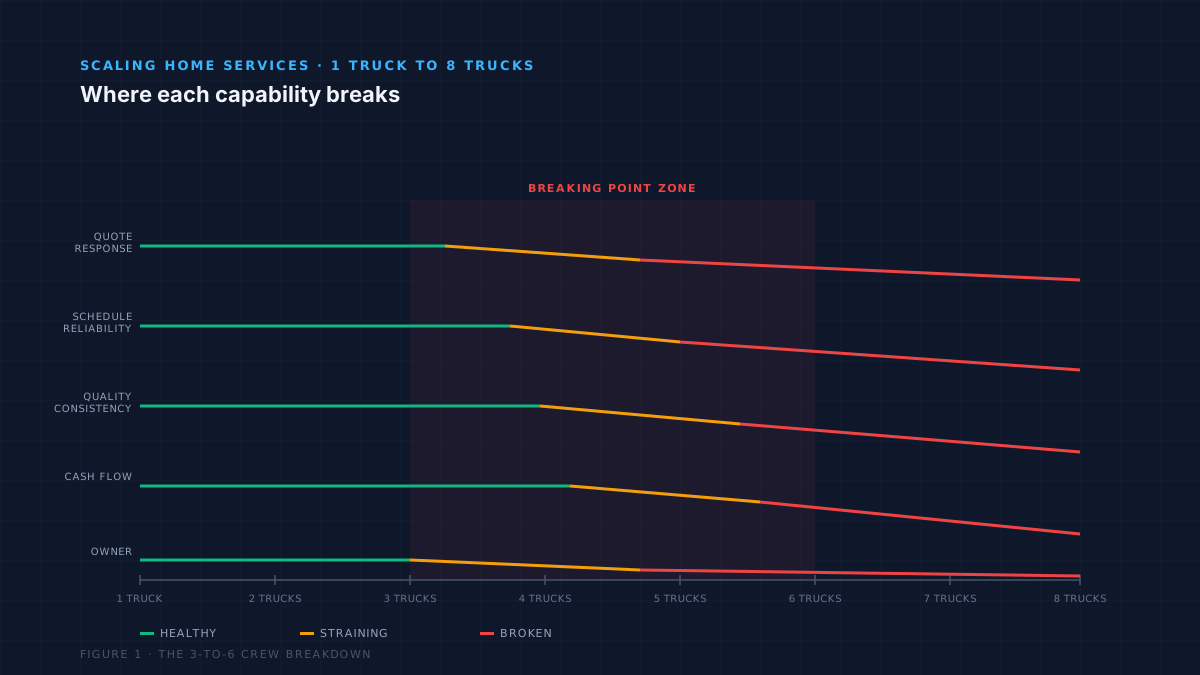
1. Quote response time slows down
Up to 3 crews, the owner sees every estimate request within hours and gets back to the customer same-day. Past that, requests sit in inboxes and texts get lost. Same-day quotes turn into 3-day responses. Half the leads close with whoever responded first — usually a competitor.
2. Schedule reliability drifts
Without a single source of truth for the schedule across crews, two trucks get double-booked, jobs get missed, customers get rescheduling apologies. Customer trust erodes quietly.
3. Quality consistency drops
The standard lived in the owner's head and the owner was on every job at 2 trucks. At 5 trucks, the owner can't be everywhere. Each foreman runs their crew the way they think is right. Customer complaints stop being unique and start being patterns.
4. Cash flow gets unpredictable
Quotes that didn't get sent. Jobs that didn't get invoiced for two weeks. Invoices that aged into 60+ days. Customer A is screaming for an invoice they never got; customer B's check has been waiting in a drawer. The owner becomes a part-time bookkeeper just to make payroll.
5. Owner availability collapses
Every problem routes to the owner because nobody else has full visibility. They're answering calls during dinner, checking quotes during their kid's game, opening the laptop after the kids are in bed. The cage closes.
Why Hiring a Manager Doesn't Fix It
The intuitive response is to hire an operations manager. The expectation: load gets shifted, owner gets some life back. The reality is usually worse, not better.
The new manager doesn't have the visibility the owner had — they have to learn the customers, the crews, the quirks of each property. Every nontrivial decision gets escalated to the owner. The owner is now coordinating a coordinator. The bottleneck didn't dissolve. It got a salary.
Headcount doesn't fix the multi-truck operations trap. Architecture does. The information has to reach the people closest to the work — not route through the owner by default.
The Architectural Fix
Three structural changes dissolve the trap. None of them are new hires:
- Single source of truth for jobs. Every job — quote, scheduled, in-progress, completed, invoiced, paid — lives in one place visible to every crew lead and office staffer. No more spreadsheets, no more 'check with the office' phone calls.
- Automated quote-to-cash workflow. Estimates get sent same-day automatically. Jobs auto-create invoices on completion. Payments auto-update the AR. The owner stops being a part-time bookkeeper.
- Signal-based escalation. A signal engine knows what's normal vs. notable. Routine activity stays quiet. Exceptions — a customer complaint, a quote sitting more than 24 hours, an invoice aging past 30 days — surface to the right person automatically.
With those three in place, the owner is no longer the system. The system is the system. Crews get the information they need. Office staff handle exceptions at their level. The owner does owner work — landing the big HOA contract, hiring the next crew lead, building the company.
When to Make the Move
The right moment to fix the architecture is when you're at 3–4 crews and feeling the strain, not when you're at 8 crews and drowning. The system scales with you. Building it earlier means you scale with it — not chasing it.
If you're already past 6 crews and the trap is acute, the build still pays back fast — usually within 2–3 months — because the volume makes every operational improvement compound.
How XeedlyAI Builds the Fix for Home Services
XeedlyAI builds operational systems for home services operators scaling past the multi-truck trap. Custom builds run $4K–$7K one-time plus $199/mo for ongoing maintenance — multi-tenant ready, AI-assisted, integrated with the tools you already use (QuickBooks, Stripe, Google). Most home services operators see relief within 30 days of deployment as the cash flow workflow tightens. For operators who want to reach HOA and PM accounts specifically, PropertyJobz is the marketplace layer that puts verified contractors in front of management companies — converting operational improvement into channel partnership revenue.
Questions, answered.
- Why does a home services business get harder to run past 3 crews?
- Up to 3 crews, the owner can personally hold the operation in their working memory — every customer, every quote, every job. Past 3, the parallel work outpaces what one person can track. Quotes get slow, schedules drift, quality varies crew-to-crew, cash flow becomes unpredictable, and the owner gets pulled into every decision. The breaking point is structural, not effort.
- Will hiring an operations manager solve the multi-truck trap?
- Usually no. The new manager doesn't have the visibility the owner had, so most decisions still escalate up. The owner ends up coordinating a coordinator. Hiring helps once the architecture is right — but architecture has to come first, or new hires just deepen the bottleneck.
- What does it cost to fix the multi-truck operations trap?
- An operational systems build for a home services business runs $4K–$7K one-time plus $199/mo maintenance. That covers a unified job system, automated quote-to-cash workflow, and signal-based escalation. Most operators see payback within 60–90 days through faster quotes, faster invoicing, and fewer dropped balls.
- Do I need to replace QuickBooks, Stripe, or my CRM?
- No. Good architecture integrates with the tools you already use rather than replacing them. The unified job system sits on top of QuickBooks for accounting, Stripe for payments, and whatever CRM you're already running. The system reduces friction; it doesn't add new logins for your crews to forget.
- What's the right time to make the operational systems investment?
- Ideally at 3–4 crews when the strain is starting but not yet acute. Building earlier means you scale with the system instead of needing it. Past 6 crews, the system still pays back fast because the volume makes every improvement compound — but you've already paid the cost of the cage in lost leads, late invoices, and missed weekends.
Ask anything about this briefing.
I've read it. I can synthesize, expand on any section, or point you to related briefings.
Get out of the cab. Stay in the lead.
Tell us how many crews you're running and where the trap is hitting hardest — quote response, scheduling, invoicing, or owner availability. We'll show you exactly what the architectural fix looks like for your operation.
More from MULTI-UNIT-OPS
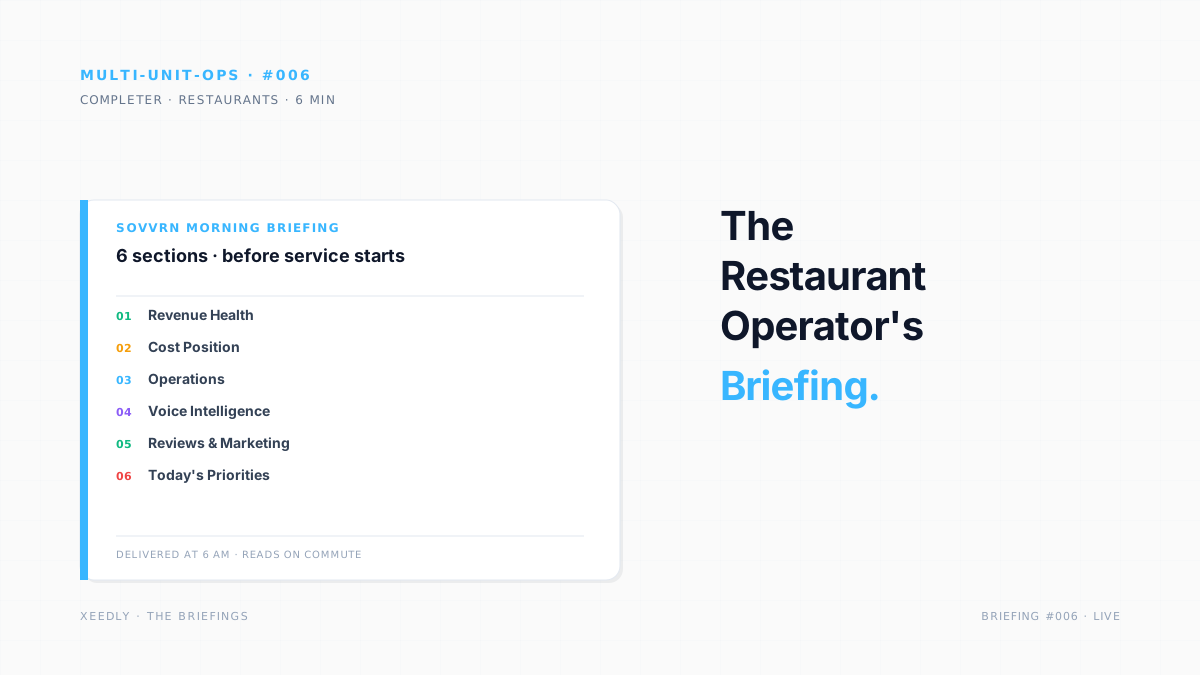
The Restaurant Operator's Morning Briefing: Six Sections That Matter
What multi-unit restaurant operators need at 6 AM before service starts. Six sections, prioritized by signal, delivered where they already work.
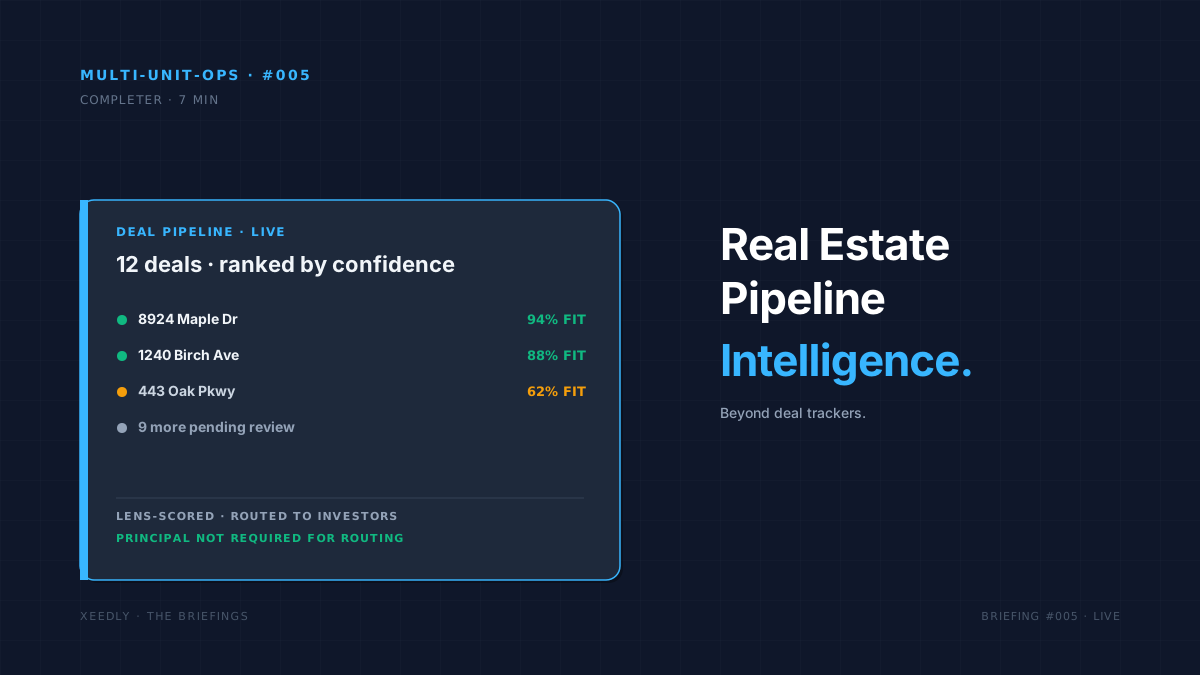
Real Estate Investment Pipeline Intelligence: Beyond Deal Trackers
Real estate investment principals run pipelines on tools that weren't built for deal-stage signal detection. Here's what fits how investors actually decide.
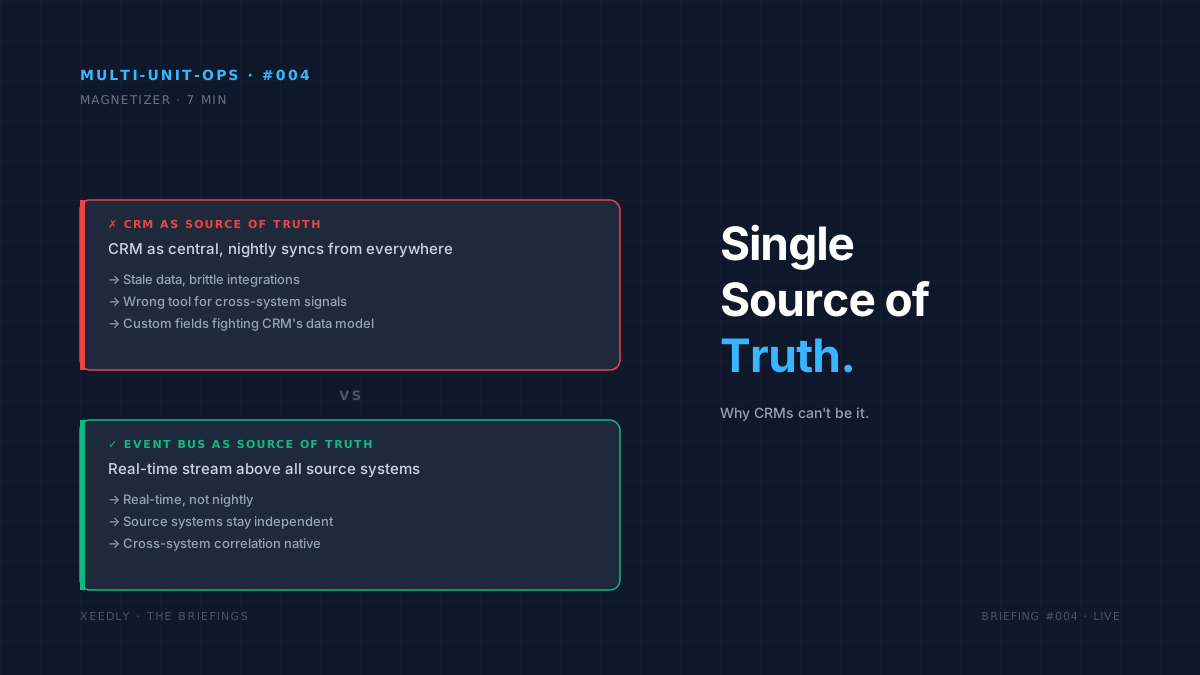
The Single Source of Truth Problem (And Why CRMs Don't Solve It)
Every operational business eventually wants a single source of truth. Most try to make their CRM that source. Most fail.