
The Contractor's Operating Stack: What 12 Jobs a Week Actually Requires

A modern multi-crew contractor's operating stack is five integrated tools, not one all-in-one platform: a field service CRM for jobs and scheduling, accounting (QuickBooks Online), payments (Stripe), an AI voice agent for inbound calls, and a marketplace presence (PropertyJobz or equivalent) for HOA preferred vendor work. The integration layer above them is what turns a stack into a system.
Why the All-in-One Trap Fails
Field service SaaS marketing pushes 'all-in-one' as a feature — one login, one platform, one bill. The reality for contractors past 3 crews is that all-in-one platforms either do many things poorly or do a few things well and fall short on the rest.
The stack approach — best tool for each layer, integrated above — wins on three measures: better tool for each job, cheaper total cost, lower switching risk if any one tool gets replaced.
The Five-Layer Stack
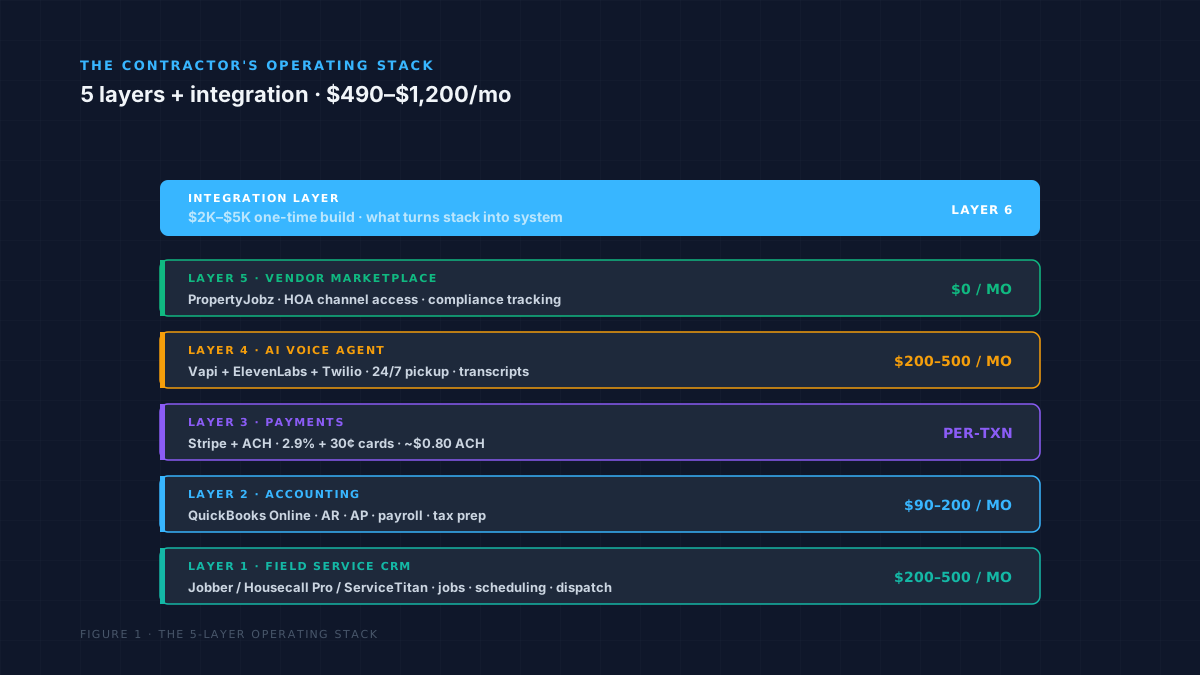
Layer 1: Field Service CRM
Jobber, Housecall Pro, ServiceTitan, FieldEdge — pick based on your trade and team size. For most multi-crew operators under 10 trucks, Jobber or Housecall Pro is the right fit at $200–$500/mo. The CRM owns: customer database, quotes, scheduling, dispatch, job status, job history.
Layer 2: Accounting (QuickBooks Online)
QuickBooks Online for almost everyone. $90–$200/mo depending on tier. Owns: chart of accounts, AR/AP, payroll integration, tax filing prep, financial reporting. Don't try to make the CRM your accounting tool — they're different systems for good reasons.
Layer 3: Payments (Stripe + ACH)
Stripe for credit cards, Stripe ACH or Plaid for direct bank payments. 2.9% + 30¢ for cards; ~$0.80 flat for ACH. Owns: payment capture, recurring subscriptions for maintenance plans, payout to your operating account. Most CRMs integrate Stripe natively — don't pay separately for two payment processors.
Layer 4: AI Voice Agent (Vapi-based)
Production-grade AI voice agent on Vapi + ElevenLabs + Twilio. $200–$500/mo depending on call volume. Owns: 24/7 inbound call pickup, qualification, appointment booking, urgent-call routing, transcripts. Pays for itself in the first month from recovered missed-call leads.
Layer 5: Vendor Marketplace (PropertyJobz)
Verified vendor marketplace for HOA management companies. No monthly platform fee on the contractor side; revenue-share model. Owns: vendor compliance tracking, HOA-side visibility, job routing from management companies, document expiry management. This is the channel partnership layer that distinguishes the contractor's stack from a residential-only operator.
The Integration Layer (What Turns Stack Into System)
Five tools sitting next to each other isn't a system — it's just expense. The integration layer is what catches the gaps between them. Three integration patterns matter most:
- CRM ↔ QuickBooks — completed jobs in the CRM auto-create invoices in QuickBooks. Customer payments in QuickBooks update job status in the CRM. No double entry, no reconciliation lag.
- Voice Agent ↔ CRM — calls captured by the AI agent create new leads in the CRM with full transcripts. Existing customer calls update the customer history.
- Marketplace ↔ CRM — jobs awarded from PropertyJobz auto-create as new jobs in the CRM with property and compliance metadata pre-populated.
Most of these integrations exist natively between the major tools. The ones that don't, a small custom integration layer ($2K–$5K one-time) handles cleanly.
What This Stack Costs
| Layer | Tool | Cost |
|---|---|---|
| Field Service CRM | Jobber / Housecall Pro | $200–$500/mo |
| Accounting | QuickBooks Online | $90–$200/mo |
| Payments | Stripe (% per transaction) | Per-transaction |
| AI Voice Agent | Vapi/ElevenLabs/Twilio bundle | $200–$500/mo |
| Vendor Marketplace | PropertyJobz | $0/mo (revenue-share) |
| Total monthly software | — | $490–$1,200/mo |
| Integration layer (one-time) | Custom build | $2K–$5K |
$490–$1,200/mo for a stack capable of running 12+ jobs a week without the owner in the middle. Compare to $4K–$8K/mo for a full-time office manager doing the same coordination work — and a manager doesn't work 24/7 or pick up after-hours calls.
When the Stack Becomes a Platform Investment
Past 6–8 crews, the stack-with-integrations approach starts showing limits. The owner needs cross-tool intelligence — patterns that span CRM, accounting, payments, and marketplace — that no single tool surfaces. That's when a custom intelligence platform deployment ($5K–$25K, $495–$995/mo managed) becomes the right next move.
Under 6 crews, the stack handles it. Past that, the intelligence layer becomes the difference between a contractor with software and a contractor with leverage.
How XeedlyAI Builds the Stack for Contractors
XeedlyAI deploys the full contractor operating stack — CRM selection, QuickBooks/Stripe integration, AI voice agent, PropertyJobz marketplace onboarding, and the integration layer above them. Stack deployments typically run $4K–$8K one-time for the integration build, plus the per-tool subscriptions. For contractors past 6–8 crews ready for the intelligence platform layer, intelligence deployments run $5K–$25K one-time plus $495–$995/mo managed intelligence.
Questions, answered.
- What tools should be in a multi-crew home services contractor's tech stack?
- Five layers: a field service CRM for jobs and scheduling (Jobber, Housecall Pro, ServiceTitan), QuickBooks Online for accounting, Stripe for payments, an AI voice agent for inbound calls, and a vendor marketplace presence (PropertyJobz) for HOA preferred vendor work. The integration layer above them is what turns the stack into a system.
- Should I use an all-in-one platform instead of multiple integrated tools?
- Past 3 crews, the stack approach wins on three measures: better tool for each layer (none of the all-in-ones excel at every layer), lower total cost, and lower switching risk. All-in-one platforms typically cost more and lock you in if any one component fails to keep up with your needs.
- What does the contractor operating stack cost monthly?
- Typically $490–$1,200/mo in software subscriptions (varies by CRM tier, voice agent call volume, accounting plan) plus a one-time integration build of $2K–$5K to connect the layers cleanly. Compare to $4K–$8K/mo for a full-time office manager doing the same coordination work.
- Why is PropertyJobz in the stack?
- PropertyJobz is the marketplace layer that gives contractors access to HOA preferred vendor work — the highest-margin, most predictable channel for home services. Most contractors miss this layer because their CRM doesn't expose them to HOA management companies. PropertyJobz fills the gap: no monthly platform fee on the contractor side, revenue-share model aligned with the contractor winning work.
- When do I outgrow the stack approach and need a custom intelligence platform?
- Usually somewhere between 6 and 10 crews. At that point the owner needs cross-tool intelligence — patterns spanning CRM, accounting, payments, marketplace — that no single tool surfaces. Custom intelligence platform deployments ($5K–$25K, $495–$995/mo managed) provide the signal-engine layer above the stack. Under 6 crews, the stack-with-integrations approach handles it.
Ask anything about this briefing.
I've read it. I can synthesize, expand on any section, or point you to related briefings.
Build the stack that fits your operation
Tell us how many crews you're running and what tools you're already on. We'll map a stack and integration plan specific to your operation — and tell you honestly when the stack approach is enough vs when you're ready for the intelligence platform layer.
More from MULTI-UNIT-OPS
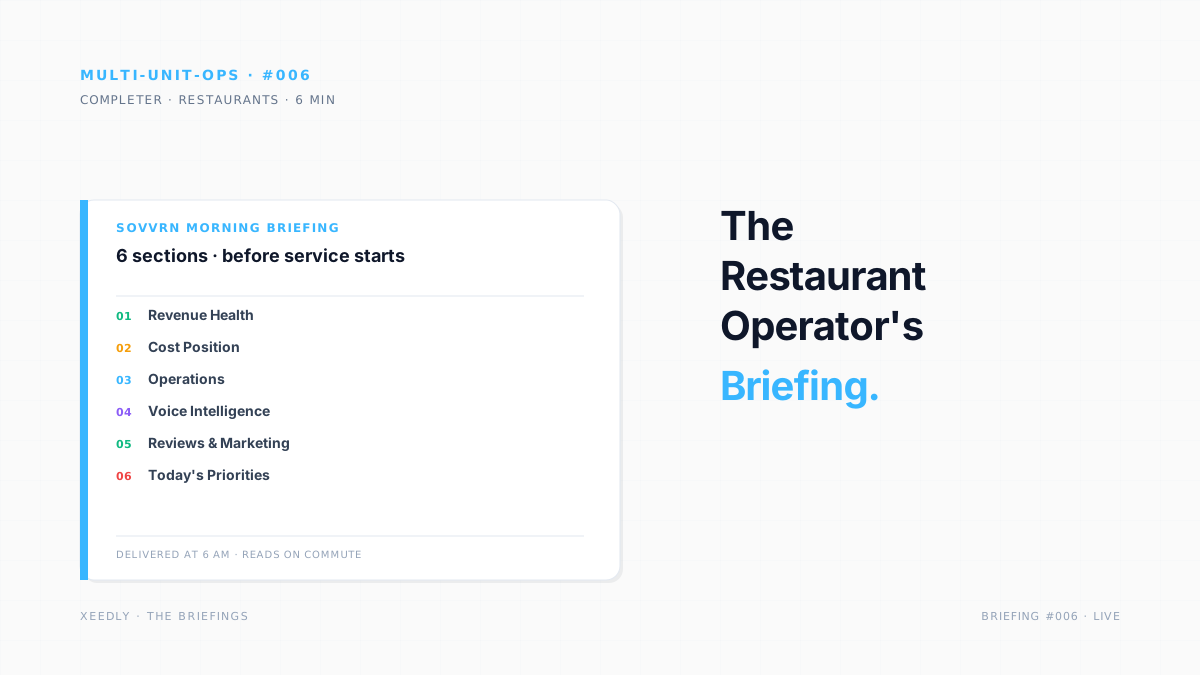
The Restaurant Operator's Morning Briefing: Six Sections That Matter
What multi-unit restaurant operators need at 6 AM before service starts. Six sections, prioritized by signal, delivered where they already work.
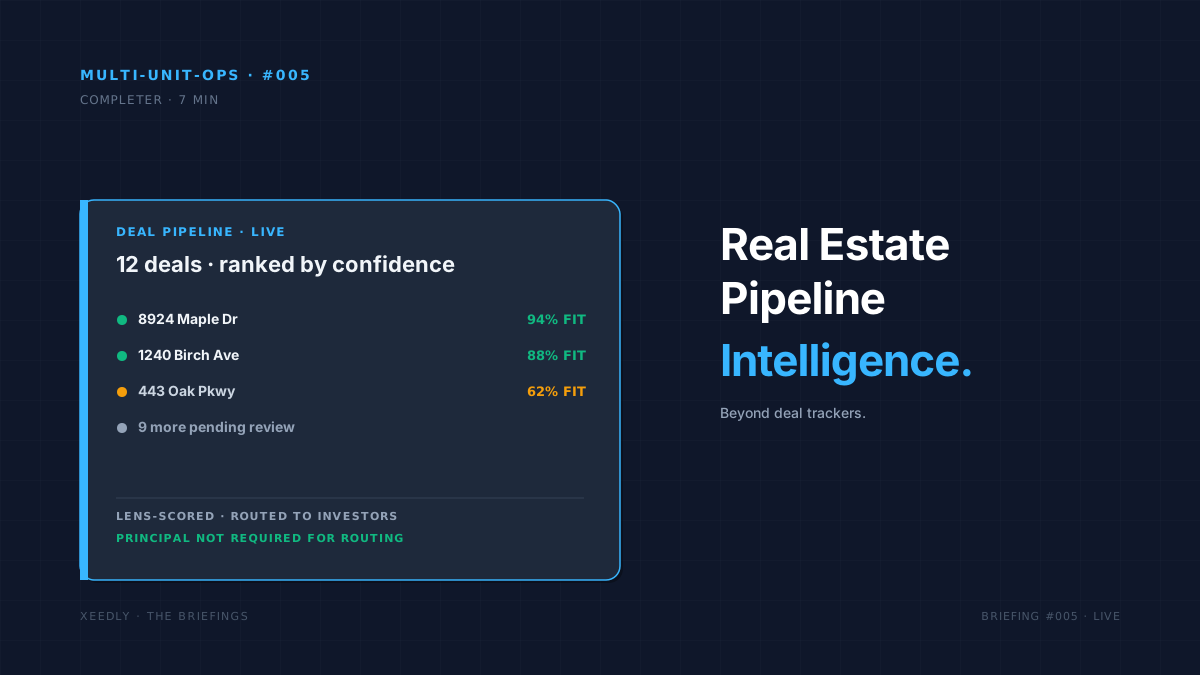
Real Estate Investment Pipeline Intelligence: Beyond Deal Trackers
Real estate investment principals run pipelines on tools that weren't built for deal-stage signal detection. Here's what fits how investors actually decide.
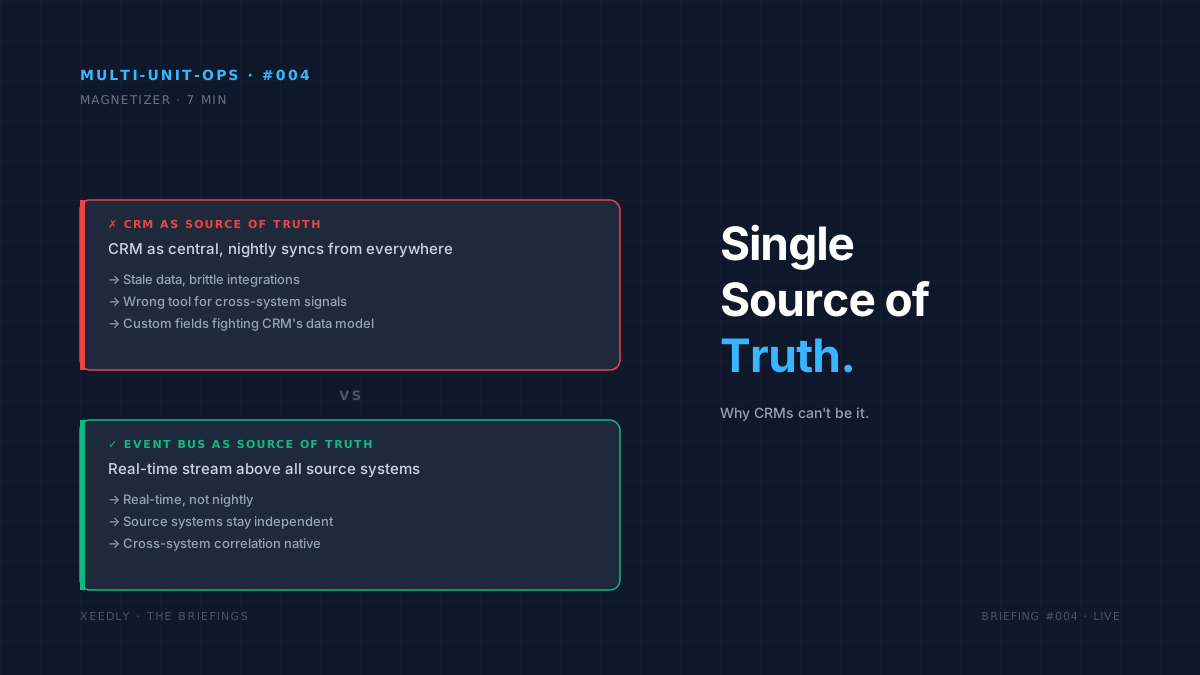
The Single Source of Truth Problem (And Why CRMs Don't Solve It)
Every operational business eventually wants a single source of truth. Most try to make their CRM that source. Most fail.